
From personal challenges to
deep connections
A personal journey of emotional growth, self-discovery and a deeper connection with horses.

My personal experiences have shaped not only who I am, but also how I understand horses and work with them today.
Discover how emotional awareness, personal growth and years of professional experience have influenced my holistic approach to equine health, training and the relationship between humans and horses.

Nicole Weinauge
Connection. Movement. Health

From personal challenges to deep connections
My journey through emotional development and professional growth
Growth with horses.
Learn how my journey to emotional depth and professional expertise are intertwined. Discover how the principles of holism and integration have shaped my work and enriched the relationship between humans and horses.
Nicole Weinauge
Connection. Movement. Health
My journey with the horses
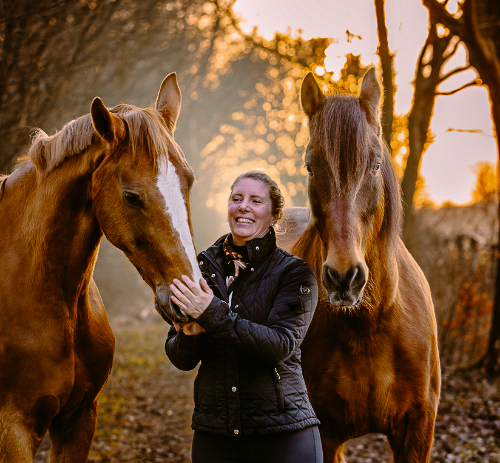
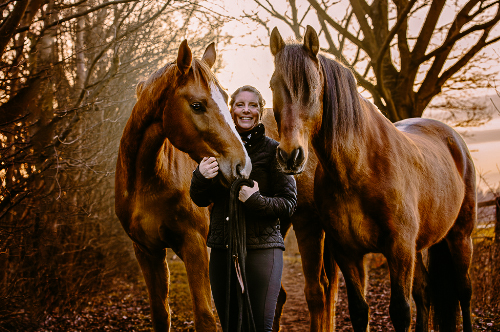
Horses have been part of my life since childhood. They have always been trusted companions, mirrors of my own emotions and individuals I have regarded as equals. Our relationship has been shaped by closeness, trust and a shared sense of freedom.
Over the years, my understanding of the connection between my horses and myself has changed profoundly. I began to look beyond training methods, techniques and external solutions, and to recognise how much my own emotions, expectations and inner tension influenced our relationship.
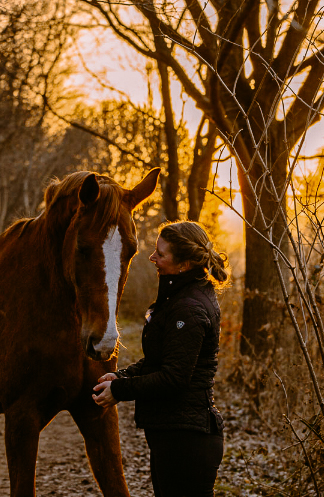
It was especially Minero, my longtime soulmate, who helped me understand just how sensitive horses are to our emotional and physical states. Not through words, but through their responses to our body language, tension, behaviour and presence.
His reactions often reflected what I had not yet recognised in myself. Through him, I began to understand that trust, emotional balance and genuine connection require me to become more aware of my own inner state.
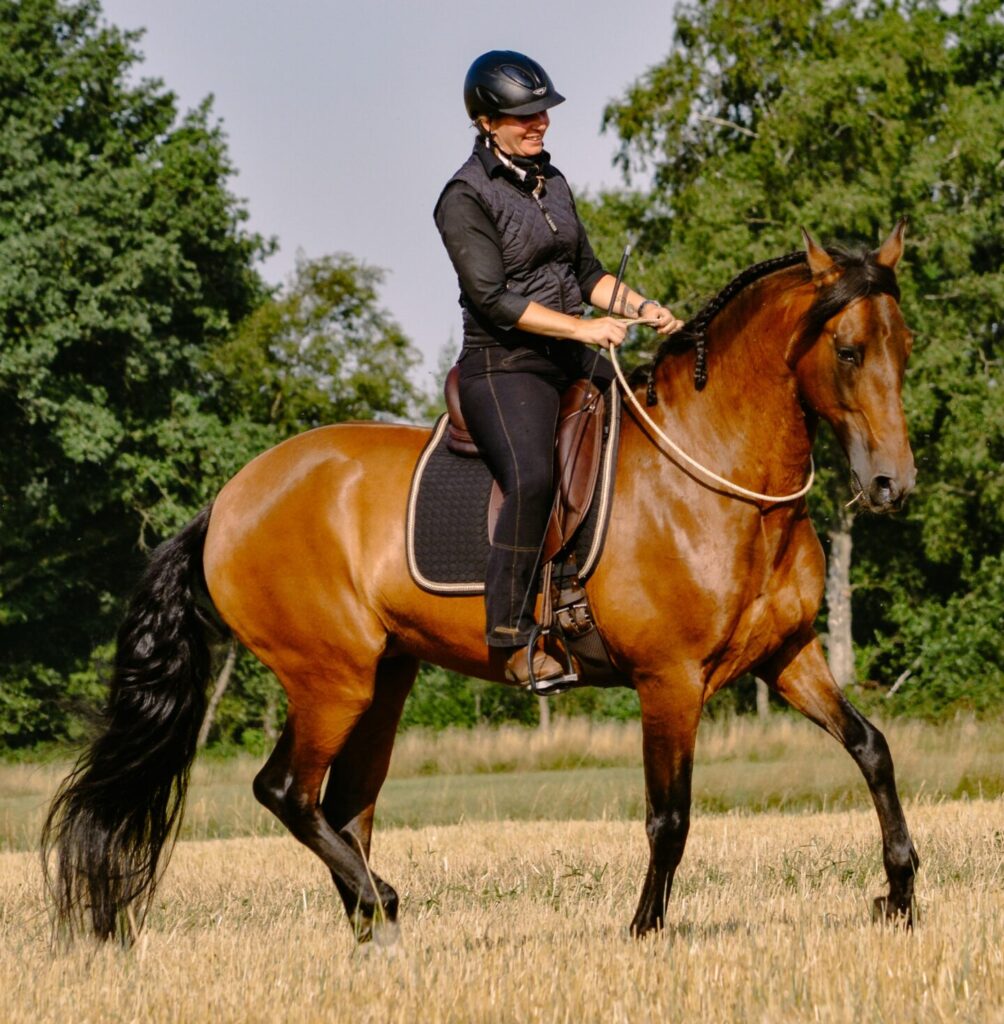
Freedom and health: How self-reflection changed our relationship
This marked the beginning of a different way of being together. As I began to recognise and change my own patterns, our relationship became more relaxed, trusting and open. There was more room to listen, understand each other and explore new possibilities without pressure or expectations.
These experiences continue to shape my work today. I combine professional knowledge and years of practical experience with a deep awareness of the physical and emotional signals expressed by both horses and humans.
I have learned that meaningful development cannot simply be achieved through techniques or demands. It also requires an understanding of the individual horse, its needs, experiences and responses, as well as an awareness of how we ourselves influence the relationship.
Today, I help horses and their owners develop this understanding, improve physical and emotional well-being and build a partnership based on trust, communication and mutual respect.
Professional development
& Training courses

Explore my professional background, qualifications and continuing education in equine health, biomechanics, holistic therapies and training. Discover how decades of practical experience and ongoing professional development shape my individual approach to working with horses and their owners.
Federal National Equestrian Sports
My equestrian background spans decades of practical experience, including training horses up to Grand Prix level in dressage. Throughout my career, I have placed particular emphasis on functional movement, biomechanics and training that supports both the physical and emotional well-being of the horse.
My passion for horses began in childhood and has grown into a lifelong dedication to understanding their movement, behaviour and individual needs. This commitment has shaped not only the way I train horses, but also my approach to equine health and rehabilitation.
Coaching licenses
My equestrian journey began at a young age, initially with eventing and show jumping. Alongside gaining extensive practical experience, I completed professional riding qualifications and coaching certifications, building a strong foundation across different equestrian disciplines.
Over time, my interest increasingly turned towards the relationship between movement, biomechanics, physical health and the horse’s ability to perform without unnecessary tension.
This led me to focus on dressage, dedicating many years to the training and development of horses up to Grand Prix level.
Dressage requires coordination, balance, strength and body awareness. Horses need to develop the physical capacity to organise their movement, maintain balance and perform increasingly complex exercises without compromising their well-being.
For me, these abilities have never been solely about competitive performance. They are closely connected to the horse’s long-term physical health, soundness and overall well-being.
Conclusion
My approach to training focuses on developing functional posture, balanced movement, physical strength and emotional well-being.
By adapting training to each horse’s individual biomechanics, physical capabilities and needs, I aim to improve coordination, stability, body awareness and freedom of movement while minimising unnecessary physical strain.
Whether working with recreational or competitive horses, my priority is to support their natural movement, physical development and long-term soundness.
Particular attention is given to recognising individual limitations, improving movement quality and reducing excessive or inappropriate loading that may contribute to injuries over time.
Classical Dressage
French classical dressage has profoundly influenced my understanding of how balance, biomechanics and correct physical development contribute to the horse’s ability to move freely and perform demanding dressage exercises without unnecessary tension.
Throughout my equestrian career, I have continued to deepen my knowledge of classical horsemanship through professional training, courses and workshops. The teachings and approaches of Egon von Neindorff, Bent Branderup and the Spanish Riding School have all contributed to my development.
However, it was the French tradition of classical dressage, particularly its emphasis on lightness, balance and subtle communication, that had the greatest influence on my approach to training.
French classical horsemanship
Over the years, I became increasingly aware of how closely a horse’s physical and emotional well-being is connected to its ability to perform.
Dressage places considerable demands on the horse’s body. Coordination, balance, strength, mobility and the ability to organise movement are essential, not only for performing advanced exercises but also for maintaining long-term physical health.
My growing interest in these relationships led me to specialise in French classical dressage, with its emphasis on lightness, balance, self-carriage and communication through the finest possible aids.
This approach has taught me to look beyond the execution of individual movements and consider how each horse uses its body, responds to the rider and develops the strength and coordination required for increasingly demanding work.
Through carefully selected exercises, I aim to improve balance, mobility, coordination and freedom of movement while recognising and addressing unnecessary muscular tension.
Rather than expecting every horse to follow the same training programme, I adapt my work to its individual biomechanics, physical capabilities, temperament and stage of development.
For me, classical dressage is not simply about achieving technical precision or reaching a particular level of performance. It is about developing the horse’s physical abilities while respecting its individual needs, preserving its willingness to work and supporting its long-term health and soundness.
Conclusion
Combining the principles of classical dressage with modern knowledge of biomechanics, movement and equine health allows me to approach each horse as an individual.
My training is guided by the horse’s physical capabilities, temperament and specific needs, rather than expecting every horse to fit into a predetermined system.
Whether working with recreational horses or those trained to the highest levels of dressage, my aim is to develop balance, strength, coordination and freedom of movement while supporting their long-term physical and emotional well-being.
Equine Communication Horsemanship Training
My continued education in equine communication and horsemanship has significantly deepened my understanding of how horses communicate, respond to human behaviour and develop trust through their experiences and interactions.
Over the years, I have studied different approaches to equine communication, learning directly from experienced trainers through courses, clinics and practical training, while continuing to expand my knowledge through independent study, specialist literature and educational resources.
Each of these experiences has contributed to my understanding of equine behaviour, body language, emotional responses and the importance of clear, respectful communication.
They have also encouraged me to question established training methods, look beyond visible behaviour and develop an approach that considers the individual horse, its experiences and its physical and emotional needs.
Silke Vallentin, Pat Parelli Instructor (Germany)
During the early stages of my education in equine communication, I attended courses with Silke Vallentin, a certified Parelli instructor.
Her training introduced me to fundamental principles of horsemanship, particularly the importance of clear communication, consistency and understanding how horses respond to human body language and behaviour.
These experiences helped me develop a greater awareness of my own communication, timing and the influence of human behaviour on the horse.
They provided an important foundation for my further education and the development of my own approach to working with horses.
Honza Bláha, Horseman (Germany)
Over several years, I attended courses with Honza Bláha, whose approach to Line Free Collection introduced me to a different way of developing horses through liberty work, communication and mental engagement.
His work demonstrated how advanced dressage movements can be developed through a clear system of communication, without relying on conventional riding aids.
A particularly valuable aspect of this training was learning to recognise and influence the horse’s attention, concentration and willingness to participate through my own body language, timing and presence.
Working with Honza deepened my understanding of how physical performance and mental engagement are connected, and how important it is to establish communication that allows the horse to remain attentive, responsive and actively involved.
These experiences became another important part of my development, particularly in understanding the relationship between freedom, communication and increasingly demanding physical work.
Mark Rashid, Horseman (USA)
Although I have never had the opportunity to work with Mark Rashid personally, his teachings have had a significant influence on the way I understand and communicate with horses.
His concept of “soft feel” particularly resonated with me. It goes beyond the physical application of aids and involves awareness, timing, sensitivity and the ability to recognise even the smallest responses from the horse.
Through studying his work, I developed a deeper appreciation of how patience, consistency and calmness can influence communication, and how important it is to consider situations from the horse’s perspective.
His approach encouraged me to pay closer attention to what horses communicate through their behaviour, rather than focusing solely on what we expect them to do.
These principles continue to influence my work, particularly in recognising individual needs, reducing unnecessary pressure and developing communication based on mutual understanding and trust.
Warwick Schiller, Performance Horsemanship (USA)
Warwick Schiller’s teachings have had a profound influence on my understanding of equine behaviour, emotional well-being and the relationship between horses and humans.
Through studying his work, I became increasingly aware of how stress, previous experiences and a horse’s emotional state can influence its behaviour, ability to learn and willingness to engage with people.
One of the most valuable aspects of his approach is the importance of recognising subtle signs of tension, uncertainty and emotional discomfort before they develop into more obvious behavioural responses.
His emphasis on awareness, patience, connection and allowing horses the time they need to process their experiences has encouraged me to look beyond behaviour itself and consider what may be happening beneath the surface.
Alongside these teachings, my studies of Stephen Porges’ Polyvagal Theory have further deepened my interest in the autonomic nervous system, stress responses and emotional regulation.
These influences have become an important part of my holistic approach, helping me consider not only how a horse moves and behaves, but also how its physical condition, emotional experiences and nervous system may influence its responses.
For me, understanding the horse’s emotional state is an essential part of creating an environment in which trust, communication and learning can develop without unnecessary pressure.
Heinz Welz, Self-Reflection Coaching (Germany)
Working with Heinz Welz encouraged me to look more closely at my own behaviour, emotional responses and the influence they can have on my interactions with horses.
Through his coaching, I learned to recognise and question my own reactions, expectations and habitual patterns rather than focusing exclusively on the horse’s behaviour.
This experience helped me understand how our emotional state, body language, intentions and responses can influence communication and the way a horse reacts to us.
It also strengthened my awareness of the importance of taking responsibility for my own behaviour, recognising when my expectations or emotions affect an interaction and consciously choosing how to respond.
These insights have become an important part of my work, allowing me to approach each horse with greater awareness, sensitivity and understanding while adapting my communication and training to its individual needs.
Conclusion
Each of these experiences has contributed to my understanding of equine communication, behaviour and the relationship between horses and humans.
They have taught me to look beyond visible behaviour, recognise the influence of emotions, expectations and learned responses, and understand how our own patterns can affect the way we interact with others.
Today, these insights are an essential part of my work. I combine my understanding of equine behaviour and communication with emotional awareness, self-reflection and a deeper exploration of the patterns that influence our reactions and decisions.
This approach also forms part of my coaching for people, both with and without horses, supporting them in recognising their own behavioural patterns, understanding their emotional responses and developing greater awareness of themselves and their relationships.
Saddle Fitting & Movement Analysis
My intensive study of saddle fitting has deepened my understanding of equine back anatomy, biomechanics and the relationship between saddle fit, posture and freedom of movement.
A correctly fitted saddle must accommodate the horse’s individual anatomy, muscular development and movement patterns while distributing pressure appropriately and allowing the back and shoulder region to function without unnecessary restriction.
Throughout my professional career, I have had the opportunity to work with experienced specialists who have contributed significantly to my knowledge.
One particularly valuable collaboration was with Carsten Engelke, founder of Saddle Me Engelke. His expertise in saddle fitting helped me develop a deeper understanding of how saddle design, weight distribution and individual anatomical characteristics influence a horse’s movement, muscular function and overall comfort.
This knowledge has become an important part of my holistic approach to equine health, allowing me to recognise potential connections between saddle fit, physical tension, compensatory movement patterns and difficulties in training.
Training
A central part of my training with Carsten Engelke focused on equine and human functional anatomy, equine kinesiology and the biomechanical relationship between horse, rider and saddle.
I learned to assess the individual anatomical characteristics of the horse’s back, its muscular development and movement patterns, and how different saddle designs influence weight distribution, postural stability and freedom of movement.
My training included the following areas:
Assessment of equine back anatomy, musculature and individual saddle fit
Functional anatomy and equine kinesiology in relation to saddle design and positioning
Evaluation of saddle contact surfaces and pressure distribution
Assessment of shoulder movement and the influence of saddle positioning on scapular mobility
Thoracic mobility, trunk stability and the horse’s ability to lift and support its back
Spinal clearance, including appropriate gullet and channel width
Saddle tree design, alignment and weight distribution
Identification of asymmetrical loading and potential pressure points
Evaluation of saddle balance and the rider’s centre of gravity
Assessment of stirrup bar positioning and its influence on rider balance and pressure distribution
Recognition and correction of saddle asymmetry
The interaction between rider anatomy, posture, saddle fit and equine biomechanics
This training significantly deepened my understanding of how saddle fit influences the horse’s posture, movement, muscular function and physical well-being.
It also reinforced the importance of assessing the horse, rider and saddle as an interconnected functional system rather than considering saddle fit in isolation.
Conclusion
Conclusion
My extensive knowledge of saddle fitting, functional anatomy and equine biomechanics allows me to assess how saddle design and fit influence a horse’s posture, muscular function and freedom of movement.
I support horse owners in recognising potential connections between saddle fit, physical tension, compensatory movement patterns and difficulties encountered during training.
By considering the individual anatomy and movement patterns of the horse alongside the rider’s posture and balance, I aim to support healthy movement, physical comfort and long-term soundness.
Rider Biomechanics, Body Awareness and Emotional Regulation
Through neurocentric training and targeted movement education, I support riders in developing proprioception, postural control, coordination and greater awareness of their own movement patterns.
By addressing the interaction between the nervous system, sensory processing, muscular coordination and emotional regulation, I help riders improve their balance, stability and ability to respond to the horse’s movement with greater precision and sensitivity.
The aim is to develop a balanced, independent seat, reduce unnecessary muscular tension and encourage more harmonious communication between horse and rider.
Neurocentric training
My further education in neurocentric training has deepened my understanding of how the nervous system influences movement, balance, coordination and body awareness.
Neurocentric training focuses on the interaction between sensory perception, information processing and motor control. The brain continuously integrates information from the visual, vestibular and somatosensory systems to organise movement, maintain postural stability and respond to changes in the environment.
In equestrian training, these processes are particularly relevant because the rider must constantly adapt to the horse’s movement while maintaining balance, coordination and an independent seat.
Through targeted exercises involving visual processing, vestibular function, proprioception and motor coordination, I work with riders to develop greater awareness of their posture, movement patterns and physical responses.
I also consider the relationship between emotional states, muscular tension and movement control. Stress, uncertainty and heightened arousal can influence coordination, breathing and the rider’s ability to respond sensitively to the horse.
My approach combines principles of neuroscience, sensorimotor training and movement education to support more precise movement, improved body awareness and a more balanced interaction between horse and rider.
Movement Education Based on Eckart Meyners’ Principles
My further education in movement training based on Eckart Meyners’ principles has expanded my understanding of functional movement, coordination and the relationship between the rider’s body and the horse’s biomechanics.
This approach draws on principles of movement science, functional anatomy and motor learning. It focuses on developing body awareness, improving coordination and identifying movement restrictions, muscular imbalances and habitual patterns that may interfere with the rider’s ability to move freely and independently in the saddle.
Particular attention is given to the mobility and coordination of the pelvis, spine, shoulder girdle and hip joints, as well as the interaction between stability and mobility throughout the body.
Through targeted movement exercises, riders learn to recognise unnecessary muscular tension, improve their postural organisation and develop greater adaptability to the horse’s movement.
An important aspect of this work is understanding how restrictions or asymmetries in the rider’s body can influence weight distribution, the application of riding aids and the horse’s freedom of movement.
By improving movement awareness, coordination and functional mobility, I help riders develop a more balanced, independent seat and communicate with their horses through increasingly subtle and precise aids.
The aim is not simply to improve riding technique, but to develop a rider who can follow the horse’s movement without unnecessary interference, allowing both horse and rider to move with greater balance, ease and coordination.
Conclusion
Conclusion
Combining neurocentric training with Eckart Meyners’ movement education has deepened my understanding of the complex relationship between sensory processing, motor control, functional movement and emotional regulation.
This knowledge allows me to recognise individual movement patterns, postural imbalances and unnecessary muscular tension, and to address them through targeted, individually adapted exercises.
My work focuses on developing the rider’s proprioception, coordination, balance and body awareness while considering how physical and emotional states influence movement and communication with the horse.
The aim is to help riders develop a balanced, independent seat, greater freedom of movement and the ability to respond to their horses with sensitivity and precision.
By considering the rider’s nervous system, functional anatomy and movement patterns alongside the horse’s biomechanics, I support a more harmonious interaction that respects the physical and emotional well-being of both horse and rider.
Equine Functional Anatomy and Kinesiology
Open College of Equine Studies (UK)
My studies at the Open College of Equine Studies provided me with a comprehensive foundation in equine anatomy, physiology, husbandry, nutrition and health.
This education strengthened my understanding of the relationship between anatomical structures, physiological processes, management practices and the horse’s overall physical well-being.
It also provided an important foundation for my further specialisation in equine functional anatomy, biomechanics and the assessment of movement and musculoskeletal health.
University of Guelph (CA)
Through my continuing education at the University of Guelph, I further expanded my knowledge of equine health, welfare, anatomy and physiology.
My studies deepened my understanding of the relationship between physiological processes, musculoskeletal function, nutrition, management and the horse’s overall well-being.
This knowledge has become an important part of my holistic approach, allowing me to consider physical health, environmental influences and individual needs when assessing and supporting horses.
Combined with my further education in functional anatomy and biomechanics, it provides a broader scientific foundation for understanding the factors that influence equine health, movement and long-term soundness.
CentaurBiomechanics (UK)
My continuing education with CentaurBiomechanics has significantly expanded my understanding of equine and rider biomechanics, functional movement and the complex interaction between horse, rider and equipment.
CentaurBiomechanics specialises in the scientific analysis of equine locomotion, rider posture and the biomechanical effects of saddles and other equipment. Using technologies such as high-speed video analysis, motion capture and pressure measurement, their research provides valuable insights into movement patterns, postural adaptations and the distribution of forces during ridden exercise.
Through this educational approach, I have developed a deeper understanding of how rider asymmetries, saddle fit, muscular function and movement restrictions can influence the horse’s biomechanics, balance and physical comfort.
This knowledge allows me to assess movement patterns more comprehensively, recognise potential compensatory mechanisms and consider the biomechanical relationships between the horse’s musculoskeletal system, the rider’s position and the demands of training.
Integrating these principles into my work helps me develop individual approaches that support functional movement, postural stability, physical well-being and long-term soundness.
Sharon May-Davis (AUS)
The research and anatomical studies of Sharon May-Davis have significantly influenced my understanding of equine functional anatomy, structural variations and their potential impact on biomechanics, movement and musculoskeletal health.
Her work focuses on detailed anatomical investigations, including variations in skeletal structures, muscular attachments, connective tissues and the relationships between anatomical development and locomotor function.
Of particular interest to me are her investigations into congenital anatomical variations, including those affecting the cervical and thoracic regions, and their potential implications for posture, movement patterns, neuromuscular function and physical performance.
Studying her research has deepened my understanding of how individual anatomical characteristics may influence a horse’s ability to coordinate movement, maintain postural stability and respond to the physical demands of training.
This knowledge has become an important part of my approach to assessing horses. Rather than focusing solely on visible movement restrictions or muscular tension, I consider the possibility of underlying structural variations and their influence on compensatory movement patterns and biomechanical function.
Integrating these anatomical perspectives into my work allows me to approach each horse as an individual, with particular attention to its structural characteristics, functional capabilities and long-term musculoskeletal health.
Conclusion
My continuing education with the Open College of Equine Studies, the University of Guelph, CentaurBiomechanics and my studies of Sharon May-Davis’ anatomical research have significantly deepened my understanding of equine functional anatomy, biomechanics and musculoskeletal health.
These different perspectives have taught me to look beyond individual symptoms or visible movement restrictions and consider the relationships between anatomical structures, muscular function, posture, movement patterns and compensatory mechanisms.
This knowledge forms an essential foundation of my holistic approach to equine health and training. It allows me to assess each horse’s individual physical characteristics, recognise potential functional limitations and develop approaches that respect its anatomical capabilities and biomechanical requirements.
My focus is on supporting healthy movement, improving functional stability, reducing unnecessary physical strain and promoting long-term soundness and well-being.
Health-promoting gymnastics on the ground
My further education in Equikinetic, developed by Michael Geitner, and ARR Asymmetry Therapy, developed by Klaus Schöneich, has expanded my understanding of corrective gymnastics, functional movement and the biomechanical relationships between posture, muscular development and locomotion.
Both approaches have contributed to my understanding of how individual movement patterns, natural asymmetries, muscular imbalances and postural adaptations can influence a horse’s coordination, stability and physical development.
Equikinetic uses structured groundwork exercises, including controlled movement on defined lines, to encourage coordinated muscular activity, postural control and body awareness. Particular attention is given to the development of the muscles involved in supporting and stabilising the horse’s body.
ARR Asymmetry Therapy focuses on recognising and addressing asymmetrical movement patterns and their influence on balance, posture and muscular coordination. This approach has broadened my understanding of how compensatory movement patterns can develop and affect the horse’s overall biomechanics.
Integrating these principles into my work allows me to develop individual groundwork programmes that consider each horse’s anatomy, physical capabilities, movement patterns and training history.
My focus is on improving functional stability, coordination, muscular balance and freedom of movement while supporting the horse’s long-term musculoskeletal health.
Equikinetic by Michael Geitner
My training in Equikinetic, developed by Michael Geitner, has expanded my understanding of systematic muscle development, postural stability and coordinated movement in horses.
Equikinetic is a structured groundwork method based on controlled exercises performed on a precisely defined square volte. The combination of consistent movement patterns, regular changes of direction and carefully managed intervals of exercise and recovery is designed to encourage balanced muscular development, coordination and body awareness.
Particular attention is given to the muscles responsible for supporting the horse’s trunk, stabilising the spine and maintaining postural control during movement.
Working on a defined curved line requires continuous adjustments in balance, limb coordination and muscular activity. These demands can be used to develop greater awareness of asymmetries, differences in muscular function and compensatory movement patterns.
An important aspect of the method is its structured progression. Exercise duration, intensity and recovery periods are adapted to the horse’s physical condition, training level and individual capabilities.
The familiar blue and yellow visual markers provide a consistent spatial framework for the exercises and help maintain clearly defined movement patterns.
Through this training, I have developed a deeper understanding of how targeted groundwork can support muscular coordination, functional stability and the horse’s ability to organise its movement.
I integrate these principles into my individual training programmes, combining them with my knowledge of functional anatomy, equine biomechanics and movement analysis to support healthy muscular development, improved coordination and long-term musculoskeletal well-being.
ARR Asymmetry Therapy by Klaus Schöneich
My advanced training in ARR Asymmetry Therapy, developed by Klaus Schöneich, has deepened my understanding of equine asymmetry, functional movement patterns and the relationship between posture, muscular coordination and locomotion.
A central focus of this approach is recognising how natural asymmetries, muscular imbalances and compensatory movement patterns influence a horse’s ability to maintain balance, coordinate its limbs and move with functional stability.
Through detailed observation and movement analysis, I learned to identify differences in weight distribution, limb movement, postural alignment and muscular activity, and to understand how these factors interact throughout the horse’s body.
Particular attention is given to distinguishing natural asymmetries from acquired movement restrictions and compensatory patterns that may develop in response to training, physical limitations or uneven muscular development.
The ARR approach uses systematic corrective groundwork to address asymmetrical movement patterns, encourage more balanced muscular coordination and support the horse in developing greater postural control and stability.
This training has strengthened my ability to recognise the connections between muscular function, movement quality and the physical demands placed on the horse during groundwork and ridden exercise.
Today, I integrate this knowledge into my individual training programmes, combining functional anatomy, movement analysis and targeted gymnastic exercises to support coordinated movement, muscular balance and long-term musculoskeletal health.
Conclusion
My training in Equikinetics and ARR Asymmetry Therapy has significantly expanded my understanding of equine movement, muscular development, postural balance and functional asymmetries.
Equikinetics provided me with a structured approach to developing muscular strength, coordination and stability through targeted groundwork. ARR Asymmetry Therapy deepened my ability to recognise asymmetrical movement patterns, understand their underlying functional relationships and develop appropriate corrective exercises.
By combining these approaches with my knowledge of functional anatomy and movement physiology, I can assess each horse’s individual movement patterns and adapt training to its physical capabilities and specific needs.
My aim is to improve movement quality, develop balanced muscular function, reduce unnecessary physical strain and support the horse’s long-term soundness, health and well-being.
Biotensegrity and Myofascial Functional Anatomy
My advanced training in biotensegrity and myofascial functional anatomy has deepened my understanding of how muscles, fascia, connective tissues and skeletal structures interact to support posture, stability and coordinated movement in horses.
A particular focus of my studies has been the relationship between myofascial connections, tension distribution, proprioception and neuromuscular coordination. These functional relationships are essential for understanding how movement restrictions, muscular imbalances and compensatory patterns can affect the horse’s entire body.
By integrating biotensegral principles into my therapeutic work and training, I focus on improving postural control, functional stability, mobility and the coordination of movement. My approach considers the horse as an interconnected musculoskeletal system rather than treating individual structures in isolation.
Biotensegrity and Myofascial Osteopathy
Biotensegrity and Myofascial Osteopathy
My continued professional development has led me to explore the principles of biotensegrity and their relevance to equine osteopathy, functional anatomy and movement.
A particularly valuable influence on my therapeutic approach has been the work of Maike Knifka, whose expertise in osteopathic techniques and myofascial treatment has significantly expanded my understanding of the functional relationships within the horse’s body.
Through her teachings, I gained deeper insights into how fascia, muscles, connective tissues and skeletal structures interact, how mechanical forces are distributed throughout the body and how restrictions in one area may influence movement and function elsewhere.
This knowledge has strengthened my ability to recognise myofascial tension patterns, understand compensatory movement strategies and incorporate targeted manual techniques into my therapeutic work.
The principles of biotensegrity have become an important part of my holistic approach, allowing me to consider the horse’s musculoskeletal system as an interconnected functional structure, with particular attention to postural balance, mobility and coordinated movement.
Biotensegral Training and Myofascial Connectivity
My close collaboration with Maike Knifka has significantly expanded my understanding of myofascial connections, osteopathic treatment techniques and the principles of biotensegrity in equine movement and rehabilitation.
Through her work, I developed a deeper understanding of how muscles, fascia and connective tissues interact as a functional network, transmitting and distributing mechanical forces throughout the horse’s body.
These relationships play an important role in postural stability, muscular coordination and the organisation of movement. Restrictions or altered tension patterns in one region may influence the function of other structures, contributing to compensatory movement patterns and changes in overall mobility.
Working with Maike has strengthened my ability to recognise these functional relationships and integrate myofascial treatment techniques with targeted movement exercises.
This knowledge forms an important foundation of my therapeutic and training approach, in which manual treatment, functional movement analysis and individualised exercises complement one another to support the horse’s mobility, coordination and physical well-being.
Maren Diehl – Biotensegrity and Functional Movement
Through Maike Knifka, I was introduced to Maren Diehl’s work on biotensegrity and its application to equine movement and training.
Biotensegrity describes a structural model in which stability emerges through the interaction of tensile and compressive forces. Applied to the horse’s musculoskeletal system, this perspective highlights the functional relationships between fascia, muscles, tendons, ligaments and skeletal structures.
Maren Diehl’s approach has further developed my understanding of how tension distribution, postural organisation and coordinated muscular activity contribute to balance, stability and efficient movement.
Rather than focusing on individual muscles or isolated body regions, biotensegral training considers how the entire musculoskeletal system responds to movement, loading and changes in posture.
These principles have become an important part of my training philosophy. They help me develop individual exercises that encourage functional stability, balanced muscular coordination, freedom of movement and the horse’s ability to adapt to physical demands without unnecessary tension.
Veronika Rohrscheid – Tensegrity Core Training
My intensive study of Veronika Rohrscheid’s work in tensegrity and functional core training has further expanded my understanding of the relationship between postural stability, neuromuscular coordination and the organisation of movement in horses.
A particular focus of this approach is the functional interaction between the deep stabilising muscles, the myofascial system and the structures responsible for supporting and coordinating the horse’s trunk during movement.
Rather than developing muscular strength in isolation, tensegrity-based core training focuses on coordinated muscular activity, balanced tension distribution and the horse’s ability to maintain dynamic stability while moving freely.
This perspective has deepened my understanding of how trunk control, proprioception and postural adjustments influence balance, limb coordination and the transmission of forces throughout the body.
I integrate these principles into my training through carefully selected exercises that support functional core stability, improve body awareness and encourage more coordinated, balanced and efficient movement.
Conclusion
My studies in biotensegrity, myofascial osteopathy and functional core training have fundamentally expanded my understanding of the horse’s musculoskeletal system and the complex relationships between posture, stability and movement.
The work of Maike Knifka, Maren Diehl and Veronika Rohrscheid has provided me with valuable perspectives on how muscular tension, fascial connectivity, proprioception and neuromuscular coordination interact to influence movement quality and physical balance.
I integrate these principles into both my therapeutic treatments and individual training programmes. By combining myofascial techniques, functional movement analysis and targeted exercises, I aim to address movement restrictions, improve postural control and support balanced muscular development.
This integrated approach allows me to consider not only where a horse experiences tension or restricted movement, but also how these limitations may be connected to compensatory patterns elsewhere in the body.
My focus is on supporting the horse’s natural movement capabilities, improving functional stability and mobility, and promoting long-term musculoskeletal health through individually adapted treatment and training.
Positive Reinforcement
Positive reinforcement has become an important part of my approach to equine training, communication and behavioural development.
Based on the principles of learning theory, positive reinforcement strengthens behaviour by introducing a rewarding consequence immediately after the desired response. When applied with precise timing, consistency and consideration of the horse’s individual needs, it can support motivation, confidence and active participation in the learning process.
My studies have deepened my understanding of how horses learn, how emotional states influence their responses and how training can encourage curiosity, cooperation and independent problem-solving.
Rather than simply correcting unwanted behaviour, I focus on understanding its underlying causes and creating learning experiences that support emotional security, clear communication and a trusting relationship between horse and human.
Principles of Positive Reinforcement
Positive reinforcement is based on the principles of operant conditioning, in which a behaviour becomes more likely to occur when followed by a rewarding consequence.
Through my studies and practical application of positive reinforcement, I have developed a deeper understanding of how horses learn, how motivation influences their behaviour and how precise timing and clear communication contribute to successful training.
An important aspect is recognising that learning is closely connected to the horse’s emotional state. Stress, fear, uncertainty and previous experiences can influence how a horse responds to training and whether it is able to engage in the learning process.
Positive reinforcement allows me to encourage desired behaviours while supporting the horse’s confidence, curiosity and willingness to participate. Rather than relying on pressure or correcting unwanted responses, I focus on creating clear, achievable learning steps that allow the horse to understand what is being asked.
The work of Marlitt Wendt has been particularly valuable in expanding my knowledge of equine learning behaviour, reward-based training and respectful communication.
These principles have strengthened my ability to adapt training to each horse’s individual personality, emotional needs and learning abilities, while developing cooperation based on understanding, consistency and trust.
Marlitt Wendt – Equine Learning and Behaviour
Marlitt Wendt, a dear friend and respected author and educator in equine behaviour and positive reinforcement, has had a meaningful influence on my understanding of how horses learn, communicate and develop trust.
Through her books, seminars and our personal collaboration, I gained valuable insights into the principles of reward-based training, particularly clicker training and its application to equine learning and behavioural development.
Her work helped me develop a deeper understanding of how precise communication, appropriate reinforcement and consideration of the horse’s emotional state influence learning, motivation and cooperation.
One of the most valuable aspects of our exchange has been recognising the importance of understanding the reasons behind a horse’s behaviour rather than focusing solely on changing its outward responses.
This perspective has strengthened my commitment to training that respects the horse’s individuality, previous experiences, emotional needs and ability to make choices.
I incorporate these principles into my work to support confidence, encourage voluntary cooperation and create learning experiences that strengthen communication and mutual trust between horse and human.
Conclusion
One of the most important insights I gained from studying positive reinforcement was that successful training is not simply about rewarding a horse for completing a task. What matters equally is the emotional state in which the horse learns and performs that task.
I began to focus not only on the behaviour itself, but also on recognising and reinforcing moments of curiosity, confidence, relaxation and voluntary engagement.
This changed the way I approached horses experiencing fear, insecurity, heightened stress responses or difficulties trusting humans. Rather than concentrating on correcting their reactions, I learned to create conditions in which they could gradually develop greater emotional stability, confidence and a willingness to participate.
Positive reinforcement became an important part of my approach to supporting emotional regulation and helping horses develop new, more positive associations with situations they previously experienced as stressful or threatening.
These insights also contributed to the development of my Trauma Release Training, in which I combine an understanding of learning behaviour, emotional responses, nervous system regulation and individual experiences to support horses in developing greater confidence, emotional resilience and trust.
Professional Development and Collaboration in Equine Therapy
My professional development in equine therapy has been shaped by years of intensive study, practical experience and collaboration with experienced practitioners from different therapeutic disciplines.
Through my exploration of osteopathy, myofascial therapy, trauma-informed bodywork, Traditional Chinese Medicine (TCM), Shiatsu, Ortho-Bionomy and energetic healing approaches, I have developed a broader understanding of the complex relationships between physical health, movement, the nervous system and emotional well-being.
Each of these disciplines has contributed a different perspective to my work, helping me recognise connections between musculoskeletal restrictions, compensatory movement patterns, physiological responses and the horse’s individual experiences.
The exchange of knowledge with practitioners such as Maike Knifka, Selina Dörling, Warnfred Süss-Desmet and Dr. Sabine Vollstedt has been particularly valuable in developing my therapeutic understanding and practical skills.
Today, I integrate these different perspectives into an individualised approach that considers the horse’s physical condition, movement patterns, nervous system responses and emotional needs as interconnected aspects of its overall health.
My Path into Equine Therapy
My interest in equine therapy initially developed through my own horses and my desire to understand the underlying causes of physical discomfort, movement restrictions and behavioural changes.
Working with practitioners from different therapeutic disciplines introduced me to approaches that extended beyond conventional training and encouraged me to explore the relationships between physical health, movement, emotional well-being and the nervous system.
These experiences gradually changed the way I observed and understood horses. I became increasingly interested in recognising not only where physical restrictions or behavioural difficulties appeared, but also how different factors might contribute to their development.
Through continued learning, practical experience and professional exchange, I began to develop a more comprehensive understanding of individual therapeutic approaches and how they could complement one another.
What began as a personal commitment to improving the health and well-being of my own horses eventually became the foundation of my professional development in holistic equine therapy.
Today, this experience continues to shape my work, in which I consider each horse individually, taking into account its physical condition, movement, behaviour, environment and personal history.
Myofascial Osteopathy - Maike Knifka
My collaboration with Maike Knifka has been an important part of my development in equine osteopathy and holistic therapeutic practice.
Through her extensive knowledge and practical experience in myofascial osteopathy, I gained a deeper understanding of the functional relationships between muscles, fascia, connective tissues and the nervous system.
Working alongside Maike allowed me to observe and explore how myofascial restrictions, altered tissue tension and compensatory movement patterns can influence posture, mobility and the horse’s overall physical comfort.
A particularly valuable aspect of her approach was learning to recognise connections between different regions of the body rather than concentrating solely on the area where discomfort or restricted movement becomes apparent.
Through practical treatment sessions and professional exchange, I expanded my understanding of manual assessment, tissue responses and the application of individualised myofascial techniques.
These experiences have significantly influenced my therapeutic work. Today, I integrate myofascial osteopathic principles into my assessments and treatments, considering muscular function, movement patterns, nervous system responses and the individual physical needs of each horse.
Trauma-Therapeutic Osteopathy - Selina Dörling
My work with Selina Dörling expanded my understanding of the relationship between physical tension, emotional trauma and the nervous system in horses.
Through her trauma-oriented osteopathic approach, I gained valuable insights into how stressful and overwhelming experiences can influence a horse’s nervous system, muscular tension, posture and behavioural responses.
Selina introduced me to gentle osteopathic techniques that combine physical assessment with sensitivity to the horse’s emotional state and individual responses to touch. Her work emphasises the importance of recognising signs of stress, protective tension and nervous system dysregulation rather than focusing exclusively on structural restrictions.
A particularly important aspect of her approach was understanding how previous experiences may continue to influence a horse’s reactions to physical contact, movement and environmental stimuli.
Through her practical guidance, I developed a deeper awareness of the connection between physical and emotional responses and the importance of creating conditions in which the horse can feel safe enough to release tension.
These experiences have become an important part of my holistic therapeutic approach, allowing me to consider the interaction between the musculoskeletal system, nervous system and emotional well-being when working with horses.
Ortho-Bionomy, Shiatsu and Healing Practice - Warnfred Süss-Desmet
Warnfred Süss-Desmet introduced me to the principles and practical applications of Shiatsu, Ortho-Bionomy and holistic healing. His extensive experience broadened my understanding of the relationship between physical tension, energetic balance and the body’s natural capacity for self-regulation.
Through his guidance, I explored Shiatsu as a traditional Japanese bodywork method based on the principles of Traditional Chinese Medicine. Using targeted pressure along specific points and meridians, Shiatsu aims to support the flow of energy, release tension and promote physical and emotional balance.
I also gained valuable insights into Ortho-Bionomy, a gentle, non-invasive approach that works with the body’s natural movement patterns, comfortable positioning and proprioceptive responses. Rather than applying force to correct restrictions, this method encourages the body to recognise and release unnecessary tension through subtle movements and sensory feedback.
An important part of my learning was understanding the relationship between the nervous system, muscular responses and the body’s ability to adapt and regulate itself.
Warnfred’s holistic approach has significantly influenced the way I observe and work with horses. His teachings have strengthened my ability to recognise individual physical and energetic needs and to integrate gentle, supportive techniques into my therapeutic work.
TCM - Dr. Sabine Vollstedt
My work with Dr. Sabine Vollstedt deepened my understanding of Traditional Chinese Medicine (TCM) and its holistic approach to equine health.
Through her knowledge and practical experience, I gained valuable insights into the principles of Chinese medicine, particularly the relationships between Qi, Yin and Yang, the Five Elements and the functional organ systems described in TCM.
Her approach helped me develop a broader understanding of how physical health, emotional well-being and energetic balance are interconnected within the framework of Traditional Chinese Medicine.
A particularly valuable aspect of my learning was Chinese herbal medicine. Sabine introduced me to the principles of selecting and combining medicinal herbs according to individual patterns of imbalance rather than focusing exclusively on isolated symptoms.
I learned how traditional herbal formulations are developed with consideration for the horse’s constitution, current condition and individual therapeutic needs.
These experiences have become an important part of my holistic approach to equine healthcare, allowing me to integrate the principles of Traditional Chinese Medicine and Chinese herbal therapy into my individual treatment concepts.
Professional Qualification in Equine Naturopathy
My professional training in equine naturopathy at Equinus Sanitas provided me with a comprehensive foundation in equine anatomy, physiology, pathology, clinical examination and holistic therapeutic approaches.
The curriculum covered the structure and function of the equine body, the development and recognition of pathological conditions, and the assessment of physical and physiological abnormalities. Particular emphasis was placed on understanding the relationships between different organ systems and recognising how disturbances in one area may influence the horse’s overall health and well-being.
My decision to pursue this qualification was driven by a desire to understand health problems beyond their individual symptoms, identify possible underlying causes and develop therapeutic approaches tailored to each horse’s specific needs.
Throughout my training, I studied a broad range of examination techniques, diagnostic principles and naturopathic treatment methods. This included integrating detailed anatomical and physiological knowledge with a holistic assessment of the horse’s physical condition, environment, nutrition and individual health history.
Equinus Sanitas, a former educational institution specialising in animal naturopathy and holistic therapeutic training, provided the professional foundation for this qualification.
The knowledge and practical skills I acquired continue to form an essential part of my work, allowing me to combine structured clinical assessment with individualised, holistic approaches to equine healthcare.
The following sections provide a detailed overview of the principal subjects and therapeutic disciplines covered during my training.
Anatomy, Physiology and Pathology
My professional training provided me with an extensive foundation in equine anatomy, physiology and pathology, enabling me to understand the complex relationships between anatomical structures, physiological functions and pathological processes.
A central focus was developing the ability to recognise abnormalities, understand their possible underlying causes and assess how different conditions may affect the horse’s overall health, movement and well-being.
The core subjects included:
Equine Anatomy: Detailed study of the musculoskeletal system, internal organs, nervous system, cardiovascular system and other anatomical structures, including their functional relationships.
Equine Physiology: Understanding the physiological processes that regulate movement, metabolism, circulation, digestion, neurological function and the body’s internal balance.
Equine Pathology: Study of common equine diseases, pathological changes and their effects on different organ systems, including the recognition of clinical signs and the relationships between disease processes.
This knowledge forms an essential foundation for my holistic approach, allowing me to assess physical findings in their broader physiological context and develop individualised therapeutic strategies.
Clinical Examination and Assessment Techniques
Clinical examination and systematic assessment formed an essential part of my professional training in equine naturopathy. I developed the knowledge and practical skills required to evaluate a horse’s health, recognise clinical abnormalities and understand possible relationships between symptoms and underlying conditions.
The main areas of training included:
Differential Diagnosis: Recognition and differentiation of clinical signs and disease patterns, including consideration of possible underlying causes and the relationships between different organ systems.
Clinical History Taking (Anamnesis): Systematic collection and evaluation of the horse’s medical history, previous illnesses, treatments, nutrition, management conditions and behavioural changes.
Equine First Aid and Emergency Care: Recognition of emergency situations, assessment of vital signs and application of appropriate first aid measures until veterinary assistance is available.
Hoof Assessment: Evaluation of hoof structure, conformation, balance and potential abnormalities, with particular attention to their influence on posture, weight distribution and movement.
These examination and assessment skills provide an important foundation for identifying potential health concerns, interpreting physical findings and developing individualised therapeutic approaches.
Disease Development and Pathophysiology
Understanding the development of disease and the physiological mechanisms underlying pathological processes was an important part of my professional training in equine naturopathy.
I studied how diseases develop, how different organ systems influence one another and how existing health conditions may contribute to further functional disturbances.
Particular attention was given to recognising relationships between clinical symptoms, underlying physiological imbalances and the progression of pathological conditions.
The main areas of study included:
Disease Development and Pathophysiology: Understanding the mechanisms of disease, physiological dysfunction and the progression of pathological processes.
Interactions Between Organ Systems: Examining how disturbances in one physiological system may affect other organs, metabolic processes and the horse’s overall health.
Underlying and Contributing Factors: Identifying potential relationships between existing conditions, environmental influences, nutrition, physical stress and individual susceptibility.
Naturopathic Therapeutic Approaches: Studying the principles and applications of manual, energetic and complementary therapeutic methods within a holistic treatment concept.
This knowledge strengthened my ability to look beyond isolated symptoms, recognise possible underlying connections and develop individualised therapeutic approaches that consider the horse as a whole.
Client Consultation, Guidance and Coaching
An important part of my professional training was learning how to support and guide horse owners through a comprehensive, individualised approach that considers not only the horse’s physical health but also its relationship with people and its living environment.
I developed skills in client consultation, communication and coaching, with particular attention to recognising factors that may influence a horse’s health, behaviour and emotional well-being.
The main areas of training included:
Client Consultation: Assessing the relationship between horse, owner and environment, including management practices, nutrition, daily routines and potential sources of physical or emotional stress.
Owner Guidance and Education: Helping horse owners better understand their horse’s individual needs, recognise changes in behaviour and physical condition, and make informed decisions about management, training and healthcare.
Coaching and Self-Awareness: Encouraging owners to reflect on their own behaviour, expectations, emotional responses and communication patterns, and to recognise how these may influence their interactions with their horses.
Individualised Support: Developing practical recommendations that take into account the horse’s health, living conditions and the owner’s individual circumstances.
This approach has become an essential part of my work, allowing me to support both horses and their owners in developing greater awareness, improving communication and creating conditions that promote long-term health and well-being.
Development of Individualised Treatment Plans
An essential part of my professional training was learning to develop individualised therapeutic approaches based on a comprehensive assessment of each horse’s physical condition, health history and specific needs.
Rather than focusing exclusively on individual symptoms, I learned to investigate possible underlying causes, recognise connections between different health concerns and integrate complementary assessment and treatment methods into a holistic therapeutic concept.
The main areas of training included:
Symptom Analysis and Root Cause Assessment: Systematic evaluation of symptoms, clinical findings and medical history to identify possible underlying causes and contributing factors. Particular attention was given to understanding relationships between physical dysfunction, environmental influences and individual health conditions.
Radiesthesia and Pendulum Techniques: Introduction to the principles and practical applications of radiesthesia, including the use of tensor and pendulum techniques as complementary methods within energetic assessment and therapeutic work.
Numerology and Semiology: Exploration of numerical symbolism, symbolic interpretation and the study of signs and their meanings as additional perspectives within holistic and energetic therapeutic approaches.
The integration of these different disciplines expanded my understanding of individualised treatment planning and strengthened my ability to consider physical, emotional and energetic aspects when developing therapeutic concepts.
Today, this comprehensive approach forms an important part of my work, allowing me to combine anatomical and physiological knowledge with complementary methods and tailor my therapeutic strategies to the individual horse.
Individualised Therapeutic Approaches and Treatment Methods
My professional training in equine naturopathy at Equinus Sanitas introduced me to a broad range of complementary and holistic therapeutic methods, providing a foundation for developing individualised treatment approaches.
A central aspect of this education was understanding that every horse has its own physical constitution, health history, physiological characteristics and individual responses to environmental and emotional influences. Effective therapeutic planning therefore requires a comprehensive assessment rather than the application of standardised treatment protocols.
Throughout my training, I explored different therapeutic disciplines, their underlying principles and their potential applications within holistic equine healthcare. Particular emphasis was placed on recognising relationships between anatomical structures, physiological functions, metabolic processes, the nervous system and emotional well-being.
I learned to combine detailed knowledge of anatomy, physiology and pathology with complementary therapeutic approaches, always considering the individual horse’s condition, needs and response to treatment.
This education strengthened my ability to develop structured, individualised treatment plans that address not only presenting symptoms but also possible underlying causes and contributing factors.
Today, these principles form an essential part of my therapeutic work. By integrating conventional anatomical and physiological knowledge with naturopathic, manual and energetic methods, I aim to support each horse’s health, physical function and overall well-being through a comprehensive and individually adapted approach.
The following sections provide an overview of the therapeutic methods and theoretical principles covered during my professional training.
Quantum Physics: Theory and Practical Applications
This part of my professional training explored theoretical concepts of quantum physics alongside their interpretation and application within holistic and energy-based therapeutic approaches.
The curriculum examined the relationships between perception, consciousness, belief systems, resonance and transformation, with particular attention to how these concepts are understood within complementary healing philosophies.
The main subjects included:
Healing, Perception and Reality: Exploring different concepts of healing and the relationships between individual perception, personal experience, resonance and transformation.
Consciousness, Beliefs and Thought Processes: Examining the role of consciousness, beliefs, thoughts and previous experiences in shaping perception and individual responses.
The Role of the Observer: Studying the concept of observation in quantum theory and its interpretation within holistic and energetic therapeutic models.
RetroSet: Introduction to a complementary method based on the concept of retrospectively addressing informational patterns and states, with the aim of exploring their perceived influence on current conditions.
Thoughts and Matter: Exploring theoretical perspectives on the relationship between consciousness, intention and physical reality, including their interpretation within energy-based healing approaches.
This training broadened my understanding of different theoretical models used in holistic therapy and provided additional perspectives for my work with energetic methods, perception and individual responses.
Traditional Chinese Medicine (TCM):
My journey into energy healing began in Australia, where I first encountered different approaches to energetic healing and experienced their influence on my personal understanding of health, consciousness and well-being.
These early experiences sparked a deep interest in the relationship between physical health, emotional experiences and energetic processes, encouraging me to explore this field further.
During my time in Canada and the United States, I expanded my knowledge through intensive studies and personal experiences involving shamanic journeying, past life regression and soul journeys. These practices introduced me to different perspectives on consciousness, emotional patterns, personal experiences and spiritual healing.
Shamanic journeying became particularly meaningful in my exploration of subconscious patterns and emotional experiences. Past life regression and soul journeying offered additional perspectives on personal development, self-awareness and the interpretation of deeply rooted emotional responses.
After returning to Germany, I continued my professional development through comprehensive Reiki training, eventually achieving Reiki Master level.
This training strengthened my understanding of energy-based healing practices and provided an important foundation for developing my own approach to intuitive and energetic therapeutic work.
Over the years, I expanded my knowledge through additional methods, including Crystal Healing, Healing Touch and Quantum Touch. I also studied chakra balancing, energy harmonisation, Emotional Freedom Techniques (EFT) and kinesiology.
Another area of my training involved Tuning Fork Therapy, which uses sound frequencies and mechanical vibrations as part of a complementary approach to
Energetic Osteo-Therapy
Introduction to Traditional Chinese Medicine (TCM): Fundamental principles and theoretical foundations.
Energetic Assessment: Identification of energetic imbalances according to TCM principles.
Diagnostic and Therapeutic Principles: Traditional assessment methods and individual treatment approaches.
Climatic Factors: The influence of external pathogenic factors on health.
Aetiology: Internal and external causes of disease according to TCM.
Five Element Theory: Wood, Fire, Earth, Metal and Water and their relationships within the body.
Meridian Theory: The pathways and functions of the meridian system.
Meridian Assessment: Locating and assessing meridian pathways.
Acupuncture Points: Location, indications and therapeutic applications.
Clinical Case Studies: Practical assessment and discussion of individual cases.
Integration of Conventional Veterinary Findings: Interpretation of clinical conditions within the TCM framework.
Acupuncture: Selection and stimulation of acupuncture points using needles.
Acupressure: Manual stimulation of acupuncture points.
Moxibustion: Application of heat using mugwort.
Tension Balancing Massage: Manual techniques for releasing muscular tension and supporting physical relaxation.
Essential Oil Therapy
Visual Assessment and Palpation: Examination of posture, tissue structures, muscular tension and tissue responses through observation and manual palpation.
Clinical Assessment: Systematic documentation and evaluation of physical findings, symptoms and functional abnormalities.
Osteopathic Assessment: Holistic evaluation of anatomical structures, functional relationships and movement restrictions.
Gait Analysis: Assessment and interpretation of movement patterns, asymmetries and compensatory mechanisms.
Individual Treatment Planning: Development of tailored therapeutic approaches based on clinical findings and the individual needs of each horse.
Myofascial and Biotensegrity Relationships: Understanding the functional connections between fascia, muscles and the body’s tension and compression systems.
Osteopathic Systems: Assessment of the interactions between different anatomical and physiological systems.
Manual Therapy Techniques: Application of massage, stretching, tapping and movement-based techniques.
Fascial System and Biotensegrity: Understanding the contribution of fascial structures to movement, stability and force transmission.
Craniosacral System: Study of the anatomical and functional relationships between the cranium, spine, sacrum and associated structures.
Lymphatic System: Understanding lymphatic circulation, fluid balance and the body’s physiological drainage processes.
Neurology and Neuropathology: Fundamental principles of nervous system function, neurological disorders and their effects on movement.
Parietal System: Assessment of the musculoskeletal structures and their functional relationships.
Musculoskeletal System: Detailed examination of muscles, bones, joints and their interactions across different regions of the body.
Color Light Therapy
Fundamentals of Colour Light Therapy: Principles of colour, light frequencies and their application in holistic equine therapy.
Properties of Different Colours: Understanding the traditional therapeutic associations of individual colours and their intended applications.
Physical and Emotional Well-being: Using coloured light to support relaxation, comfort and emotional balance.
Nervous System Regulation: Exploring the use of colour light therapy as a complementary approach to calming and relaxation.
Individual Colour Selection: Choosing colours according to the horse’s physical condition, emotional state and individual needs.
Application Techniques: Practical use of colour light devices, treatment areas, exposure times and appropriate safety precautions.
Holistic Treatment Approach: Integrating colour light therapy with other complementary therapeutic methods to support the horse’s overall well-being.
Homeopathy
Fundamentals of Homeopathy: Principles of classical homeopathy and its application in holistic equine healthcare.
Homeopathic Materia Medica: Study of homeopathic remedies, their characteristic profiles and traditional therapeutic applications.
Remedy Selection: Individual selection of remedies based on physical symptoms, behavioural characteristics, emotional responses and constitutional factors.
Potencies and Dosage: Understanding different homeopathic potencies, preparation methods, dosage and administration.
Constitutional Homeopathy: Assessment of the horse’s individual constitution, temperament, medical history and recurring health patterns.
Acute and Chronic Conditions: Homeopathic treatment approaches considering the individual symptoms and overall condition of the horse.
Repertorisation and Case Analysis: Systematic evaluation of symptoms using homeopathic repertories and materia medica.
Individual Treatment Concepts: Integration of homeopathy into holistic therapeutic approaches, considering physical, emotional and environmental factors.
Conclusion
Principles of Classical Homeopathy: Understanding the fundamental principle of “like cures like” and its application in homeopathic practice.
Case Taking and Medical History: Systematic assessment of medical history, individual symptoms, constitutional characteristics and relevant health factors.
Chronic Conditions: Study of chronic disease patterns, their development and underlying causes from a homeopathic perspective.
Acute and Emergency Conditions: Traditional homeopathic approaches to acute symptoms, traumatic experiences and emergency situations as complementary care.
Homeopathic Potencies: Selection and application of different potencies according to individual symptoms and treatment objectives.
Nosode Therapy: Study of nosodes, their preparation, characteristics and traditional applications within homeopathic practice.
Trauma and Shock: Homeopathic approaches to physical trauma, emotional shock and associated stress responses.
Symptom Suppression: Understanding the concept of symptom suppression and its significance within classical homeopathic theory.
Neurological and Hormonal Support: Study of homeopathic remedies traditionally associated with nervous system function and hormonal regulation.
Bone and Musculoskeletal Remedies: Homeopathic remedies traditionally used for bone health, connective tissue and musculoskeletal conditions.
Constitutional Remedies: Individual remedy selection based on constitutional characteristics, temperament and recurring health patterns.
Miasmatic Theory: Study of classical miasmatic theory and its interpretation of hereditary predispositions and chronic disease patterns.
Collaboration with Gut Freudenholm Veterinary Practice – Dr Marco Halbrock
My practical training and collaboration with Gut Freudenholm Veterinary Practice, led by Dr Marco Halbrock, have provided valuable opportunities to deepen my clinical understanding through the assessment and treatment of horses with a wide range of health conditions.
A particular focus has been on recognising the relationships between different body systems, understanding complex clinical findings and developing individual therapeutic approaches.
Key areas of study and practical experience include:
Gastrointestinal and Spinal Connections: Understanding the neurological and functional relationships between the digestive system and the spine.
Spinal Disorders: Assessment of spinal abnormalities, functional restrictions and their effects on posture and movement.
Gastrointestinal Disorders: Understanding digestive diseases and their influence on the horse’s overall health.
Neurological Function: Exploring disturbances in nerve function, neurological regulation and their effects on movement and physical well-being.
Urogenital Disorders in Mares: Understanding conditions affecting the reproductive and urinary systems.
Vertebral and Pelvic Dysfunction: Assessment of vertebral and pelvic asymmetries, restricted mobility and associated compensatory movement patterns.
Limb Injuries and Disorders: Understanding musculoskeletal injuries, joint conditions and their effects on movement and performance.
These practical experiences have strengthened my ability to recognise complex relationships between anatomical structures, physiological processes and clinical symptoms. They continue to inform my holistic approach to equine health, combining detailed assessment with individually adapted therapeutic strategies.
Bioenergetic therapy
My journey into bioenergetic therapy began in Australia, where I first encountered energy healing and discovered an approach to health and well-being that extended beyond the physical body. These early experiences sparked a lasting interest in the relationship between physical health, emotional experiences and energetic processes.
During my time in Canada and the United States, I continued exploring different approaches to energy work, including shamanic journeys, past life regression and soul journeys. These experiences deepened my understanding of emotional patterns, personal experiences and the energetic perspectives of traditional healing practices.
Back in Germany, I pursued extensive training in Reiki, eventually attaining Reiki Master level. This became an important foundation for my subsequent work in bioenergetic therapy.
Over the years, I expanded my knowledge through various complementary approaches, including Crystal Healing, Healing Touch, Quantum Touch, chakra balancing, Emotional Freedom Techniques (EFT) and kinesiology. I also incorporated Tuning Fork Therapy, using sound and vibration as part of my energetic work.
Through these different methods, I developed a more comprehensive understanding of the relationships between physical tension, emotional experiences and individual responses to stress. Each approach has contributed to my ability to recognise individual needs and adapt my therapeutic work accordingly.
Today, bioenergetic therapy forms an integral part of my holistic health concept for both horses and people. Rather than applying a fixed treatment method, I combine different techniques according to the individual situation, taking physical condition, emotional well-being and personal experiences into consideration.
My work is based on the understanding that physical and emotional processes are closely connected. By bringing together my experience in energy healing, bodywork and emotional support, I aim to create an individual therapeutic approach that respects the needs of each horse and person.
Emotional Coaching
My approach to emotional coaching has developed through many years of working with horses and people, combined with my experience in holistic therapy, body awareness and the relationship between emotions, behaviour and the nervous system.
During my training as an equine naturopath, I also studied coaching techniques for horse owners. Over time, however, my interest extended far beyond the challenges people experience with their horses. I became increasingly interested in understanding why we respond the way we do, how past experiences influence our emotions and behaviour, and why certain patterns continue to shape our lives, often without our conscious awareness.
Our experiences, beliefs and learned responses influence how we perceive ourselves, relate to others and respond to situations that challenge us. Emotional coaching creates an opportunity to recognise these patterns, understand their origins and develop greater awareness of our own needs, emotions and boundaries.
Horses can play a valuable role in this process. Their sensitivity to body language, movement, tension and changes in human behaviour allows us to observe aspects of our communication that we may not consciously recognise. Working with horses can therefore offer meaningful opportunities for self-reflection, emotional awareness and personal development.
My coaching combines elements of Gestalt-based approaches, guided imagery, body awareness, emotional regulation and energy work. Rather than following a fixed method, I adapt my approach to the individual person, their experiences and their current challenges.
Whether someone wishes to improve their relationship with their horse, understand recurring emotional patterns, develop greater confidence or reconnect with their own needs and feelings, my work focuses on supporting genuine self-awareness and meaningful personal change.
At the heart of my approach is helping people understand themselves more deeply, recognise what influences their decisions and behaviour, and develop the ability to live and act in greater alignment with who they truly are.
Voss Institut Hamburg
The work of the Voss Institute has deeply inspired me, particularly in the areas of bodywork and the conscious perception of bodily sensations. The institute’s innovative methodology, which focuses on the connection between physical and emotional experiences, has enriched my perspective on the holistic care and development of horses. Their approaches, which foster an understanding of the interplay between body and mind, have opened new perspectives for me and strengthened my enthusiasm for a comprehensive therapeutic approach.
The upcoming IMpuls® Body-Gestalt Coaching training, which begins in 2025, represents an exciting next step for me. This program promises to further deepen my skills in holistic bodywork and provide me with new tools to recognize and address the physical and emotional needs of horses even more effectively. I look forward to integrating the principles of the IMpuls® approach into my practice and further implementing the insights of the Voss Institute in my work.
Literature
Alongside my professional training and practical experience, independent study of specialist literature has always been an essential part of my professional development.
Over the years, I have explored a wide range of subjects, including equine anatomy, movement science, physiology, behaviour, classical dressage, holistic healthcare and the relationships between physical and emotional well-being.
Studying independently allows me to explore specific subjects in greater depth, examine different perspectives and continuously expand my understanding beyond the content of formal training programmes.
I place particular importance on questioning established approaches, comparing different sources and understanding the underlying principles rather than simply adopting individual methods.
I am often asked whether there is a single book that explains my entire approach to equine health and training. There isn’t. My work has developed through decades of practical experience, professional education and extensive independent study across many different disciplines.
The following selection of books represents some of the literature that has influenced my knowledge and professional development.
Books about training and classical dressage
- Clayton, Hilary M. “Conditioning Sport Horses”
- Barbier, Dominique “Perfect Dressage Riding. Paths to Classical Horse Training”
- By Neindorff, Egon “The Pure Doctrine of Classical Horsemanship”
- Karl, Philippe “Equestrian Art: Classical Dressage up to High School”
- Karl, Philippe “Dead ends of modern dressage: the search for a “classical” alternative”
- Dr. Ritter, Thomas “Classical Riding Based on Biomechanics”
- Racinet, JC “Francois Baucher, Enfant Terrible oder Genie?”
- Oliveira, Nuno “Young Horses, Young Riders”
- Oliveira, Nuno “Classical Principles of the Art of Training Horses”
- Gustav Steinbrecht “Classical Horsemanship”
- François Robichon de La Guérinière “Reitkunst im Detail”
- Alois Podhajsky “The Art of Riding in Practice”
- Seunig, Waldemar “From the paddock to the capriole”
- Solinsky, Sadko “The Gymnasium of the Leisure Horse, the Path to Horse-Friendly Riding”
- Solinsky, Sadko “Rider, Riding, Equestrianism, the basics of horse-friendly riding”
- Solinsky, Sadko “Horse Gymnastics, Elements of Horse Training in 100 Pictures”
- By Maday, Stefan “Psychology of the Horse and Dressage”
Books about communication and horse language
- Neugebauer, Dr. Gerry M. & Julia Karen “Lexicon of Horse Language”
- Hendrich, Fritz “Horse Sense”
- Rees, Lucy “The Nature of the Horse”
- Weritz, Linda “The Learning Behavior of Horses: On the Intelligent Handling of Horses”
- Ludwig, Kirsti, Wilsie Sharon “Horse Speak – The Basis for Fine Riding”
- Wilsie Sharon “Essential Horse Speak: Continuing the Conversation”
- Rashid, Mark “The One Who Listens to Horses”
- Rashid, Mark “The One Who Listens to Horses”
- Rashid, Mark “A Good Horse Is Never a Bad Color”
- Rashid, Mark “Horses Never Lie”
- Rashid, Mark “Life Lessons from a Ranch Horse”
- Rashid, Mark “Horsemanship Through Life”
- Rashid, Mark “Whole Heart, Whole Horse”
- Rashid, Mark “Life with Horses: Spirit of the Work” Finding the Missed Path: The Art of Restarting Horses
- Rashid, Mark “Finding the Missed Path: The Art of Restarting Horses”
- Schiller, Warwick “The 12 Principles of Horse Training”
Books about the rider's seat and influence
- Susanne von Dietze “Riding with Feeling and Reason”
- Swift, Sally “Riding from the Center: Horse and Rider in Balance”
- Wanless, Mary “Perfect fit, effective impact”
- Rolmanis, Debbie “Biomechanics for the Rider”
- Meyners, Eckart “Learning and teaching to sit: Harmony of rider and horse”
- Meyners, Eckart “Sense of Movement and Rider’s Seat: Avoiding Riding Errors – Solving Seat Problems”
Books about horse health
- Denoix, Jean Marie & Jean Pierre Pailloux “Physiotherapy and Massage for Horses”
- Meagher, Jack “Muscle Problems in Horses”
- Nickel, Richard “Textbook of Domestic Animal Anatomy”
- Budras, Klaus Dieter “Atlas of the Anatomy of the Horse”
- Wissdorf, H. “Anatomy and Propaedeutics of the Horse”
- . Rüsbüldt, Anke “Back problems in horses”
- Higgins, Gillian „ How your horse moves”
- Diel, Maren “Beyond Biomechanics – Biotensegrity”
- Wittek, Cornelia Wittek “Medicinal Plants and Home Remedies for Horses”
- Dülffer-Schneitzer, Beatrice “Horse Health Book”
- Grundmeyer, Kaja “Healthy Horses Through the Power of Medicinal Herbs”
- Fritz, Christina “Diseases of civilization in horses: Holistic treatment of chronic diseases”
- Jones, Janet L. “Horse Brain, Human Brain: Insights from Neuroscience – How Horses and Humans Think, Feel, and Act”
- Sara Wyche, Sara Wyche “Holistic Medicine for Horses”
- Heerde, Michael “Horse treatment with Traditional Chinese Medicine (TCVM)”
- Holena, Hilke “Herbal Medicine for Horses”
- Vormwald, Kristina “Practical Handbook for Animal Naturopaths”
- Daubenmerkl, Wolfgang “Homeopathy in Horses”
- Michels, Vanessa “Holistic Botany throughout the Year for Horse Owners”
- Rakow, Michael “Horses – Healthy Through Homeopathy”
Books about animal communication
- Dietmann, Ulrike “Animal Communication with Horses”
- Lind, Carola and Müller, Karin “The Sixth Sense: Dialogue with Horses”
- Lind, Carola and Müller, Karin “Conversations with Horses: Amazing Experiences with the Sixth Sense”
- Kohanov, Linda “The Tao of the Equus”
Books about energy work with horses
- Dale, Cyndi, “The Energy Body of Animals”
- Mayer, Sigrid, Kromoser, Wolfgang “What energy work can do: An illustration in pictures using horses”
- Fritz, Christina “Recognize your horse in the 5 elements”
- Krokowski, Carola “Animal Acupuncture – Energetic Disturbance Patterns”
- Fegerl, Barbara “Soul Whispers: Holistic Energy Work with Animals, 3rd ed.
Books about emotional coaching and the human psyche
- Goleman, Daniel “EQ. Emotional Intelligence”
- Voss, Bernhard “Body Traces: Understanding and Healing the Causes of Physical and Psychological Symptoms”
- Whitworth, Laura “Co-Active Coaching”
- Mclaren, Karla “Language of Emotions: What Your Feelings Are Trying to Tell You”
- Gruen, Arno “The Betrayal of the Self: The Fear of Autonomy in Men and Women, its Suppression and the Consequences”
- Gruen, Arno “Alienated from Life: Why We Must Learn to Feel Again”
- Dietrich Klinghardt / Amelie Schmeer-Maurer “Handbook of Mental Field Techniques”
- Krämer, Raphael, Schöppe, Lars “Neuropsychological Coaching”
- Nehls, Michael “The Exhausted Brain: The Origin of Our Mental Energy – and Why It Fades”
Studies
Alongside my professional training and practical experience, independent study of specialist literature has always been an essential part of my professional development.
Over the years, I have explored a wide range of subjects, including equine anatomy, physiology, movement science, behaviour, classical dressage and holistic healthcare. Studying different approaches has allowed me to deepen my knowledge, question established methods and develop a broader understanding of the relationships between physical health, movement and emotional well-being.
I place great importance on critically evaluating information, comparing different perspectives and understanding the principles behind individual methods rather than simply following them.
I am often asked whether there is a single book that explains my holistic approach to equine health. There isn’t. My work has developed through decades of practical experience, professional education and extensive independent study across many different disciplines.
Studies and articles on social behavior
- Social relationships in a herd of Sorraia horses: Part I. Correlates of social dominance and contexts of aggression, Filipa Heitor, Maria do Mar Oom, Luís Vicente, Published in: Behavioural Processes, 2006. This study examines the social structures within a herd of Sorraia horses, focusing on social dominance and aggression. It identifies factors that correlate with social rank, as well as the contexts in which aggressive interactions occur. DOI: 10.1016/j.beproc.2006.05.004
- Social interactions of free-ranging Przewalski horses in semi-reserves in the Netherlands, Keiper R, Receveur H., Published in: Applied Animal Behaviour Science, 1992. This study investigates the social interactions of Przewalski’s horses in semi-wild reserves. It analyzes behavioral patterns and social structures within the herds. DOI: 10.1016/S0168-1591(05)80068-1
- An Analysis of Dominance, Its Behavioural Parameters and Possible Determinants in a Herd of Icelandic Horses in Captivity. Van Dierendonck MC, de Vries H, Schilder MBH (1995): Netherlands Journal of Zoology, 45, 362-385. DOI: https://biblio.ugent.be/publication/5834570
- Movement initiation in groups of feral horses, Krueger, K., Flauger, B., Farmer, K., & Hemelrijk, C., Published in: Behavioural Processes, 2014. This study investigates how movements are initiated in groups of wild horses. It analyzes social interactions and their influence on group movement.https://www.sciencedirect.com/science/article/abs/pii/S0376635713002222
- The Natural Horse and Unnatural Behaviour, Proceedings of the BEVA Specialist Days on Behaviour and Nutrition. Ed. PA Harris et al. Equine Veterinary Journal Ltd. This publication addresses equine behavior and the impact of nutrition on their health and well-being. It provides insights into the natural behaviors of horses and how unnatural conditions can influence their behavior.https://www.succeed-equine.com/wp-content/uploads/2023/05/The-Natural-Horse-and-Unnatural-Behaviour.pdf
- Equine expressions: understanding your horse ‘s body language. Citation metadata, Laurel Scott, Equisearch.com, July 2, 2010. This article offers insights into equine body language and helps owners better understand their animals’ behavior and emotions.
- Behaviour of Horses, SM McDonnell, 2002, CAB International, The book provides a comprehensive overview of horse behavior, including social interactions, communication patterns and behavioral abnormalities.https://www.cabidigitallibrary.org/doi/pdf/10.5555/20023076012
Studies and articles on the learning behavior of horses
- Equine Learning Behaviour, Jack Murphy, Sean Arkins: This study examines the learning behavior of horses and analyzes how horses acquire, process, and apply information. The goal is to develop effective training methods based on the natural learning processes of horses.https://www.sciencedirect.com/science/article/abs/pii/S0376635707000976
- Learning About Horses: What Is Equine Learning All About? Heitor, L. Vicente, Behavioural Processes, 2007. This article examines the fundamentals of learning in horses, including the cognitive processes that influence their behavior. The authors discuss various learning methods and their application in horse training.
Studies and articles on the psychological behavior of horses
- Understanding Equine Stereotypies, Christine Nicol, Equine Veterinary Journal, 1999, Wiley Online Library. This article examines the phenomenon of stereotypies in horses, including their causes, effects, and possible treatment methods. Stereotypies are repetitive, unnatural behaviors that often occur in response to stress or inadequate husbandry conditions.https://beva.onlinelibrary.wiley.com/doi/abs/10.1111/j.2042-3306.1999.tb05151.x
- Psychological Factors Affecting Equine Performance, SD McBride, DS Mills, BMC Veterinary Research, 2012, Springer. This article examines how psychological factors influence equine performance, including stress, anxiety, and motivation. The findings offer important insights for trainers and veterinarians to improve equine performance.https://link.springer.com/article/10.1186/1746-6148-8-180
- Indicators of Stress in Equitation, UK Borstel, EK Visser, C. Hall, Applied Animal Behaviour Science, 2017, Elsevier. This article examines various indicators of stress in horses during riding. The study identifies behavioral and physiological signs that indicate a horse is stressed and offers recommendations for improving its well-being.
- Assessing Equine Emotional State, C. Hall, H. Randle, G. Pearson, L. Preshaw, et al., Applied Animal Behaviour Science, 2018, Elsevier. This article examines methods for assessing the emotional state of horses, including the analysis of behavioral indicators and physiological parameters, to understand well-being in different contexts.https://www.sciencedirect.com/science/article/abs/pii/S0168159118301163
- Improving the Recognition of Equine Affective States, C. Bell, S. Rogers, J. Taylor, D. Busby, Animals, 2019, MDPI. This article discusses methods for better recognizing the emotional states of horses. The authors propose approaches to improve our understanding of equine affective states and promote their well-being.https://www.mdpi.com/2076-2615/9/12/1124
- Indicators on the Outside: Behaviour and Equine Quality of Life, C. Hall, R. Kay, H. Randle, L. Preshaw, et al., 2019. This article examines how equine behavior can serve as an indicator of their quality of life. The authors analyze various behaviors and their relationship to the animals’ well-being.https://researchoutput.csu.edu.au/en/publications/indicators-on-the-outside-behaviour-and-equine-quality-of-life
Studies and articles on horse movement
- Investigation of equine “crookedness”: Symmetry of movement and hoof load, Katharina Dorothee Rehren, University of Veterinary Medicine Hannover Foundation. This work investigates crookedness in horses, analyzes the symmetry of their movement, and examines the distribution of hoof load. The aim is to identify causes of asymmetrical movement and to develop approaches for correction and prevention.
- Correction Models for Skin Displacement in Equine Kinematics Gait Analysis, P.R. Van Weeren, A.J. Van den Bogert, et al., Journal of Equine Veterinary Science, 1992. This article discusses correction models for skin displacement in equine kinematic gait analysis. The authors investigate how skin movements affect the accuracy of motion analysis and present methods for improving data quality.
- Motion Analysis and Its Use in Equine Practice and Research, SJ Hobbs, D. Levine, J. Richards, H. Clayton, et al., Wiener Tierärztliche Monatsschrift, 2010. This article discusses the application of motion analysis in equine medicine and research. The authors discuss various methods of motion analysis and their significance for the diagnosis and treatment of movement disorders in horses.
Studies and articles on equine health
- Equine Metabolic Syndrome, N. Frank, RJ Geor, SR Bailey, AE Durham, PJ Johnson. This article discusses equine metabolic syndrome (EMS), a condition characterized by insulin resistance, obesity, and an increased susceptibility to laminitis. The authors discuss diagnostic criteria, risk factors, prevention strategies, and treatment options for EMS.https://onlinelibrary.wiley.com/doi/full/10.1111/j.1939-1676.2010.0503.x
- Equine Asthma: Current Understanding and Future Directions, Laurent Couetil, Jacqueline M. Cardwell, Renaud Leguillette, Melissa Mazan, Eric Richard, Dorothee Bienzle, Michela Bullone. This article provides a comprehensive overview of the current understanding of equine asthma, including its pathophysiology, diagnosis, risk factors, and treatment options. It also discusses future research directions and therapeutic approaches.https://www.frontiersin.org/journals/veterinary-science/articles/10.3389/fvets.2020.00450/full
- Basic Needs in Horses? — A Literature Review, K. Krueger, L. Esch, K. Farmer, I. Marr, Animals, 2021, MDPI. This review examines the basic needs of horses, including physiological, psychological, and social requirements. The aim is to promote a better understanding of horse husbandry and welfare.https://www.mdpi.com/2076-2615/11/6/1798
- Stress/Strain Behaviour of the Equine Laminar Junction, JE Douglas, TL Biddick, et al., Journal of Experimental Biology, 1998. This study investigates the stress and deformation behavior of the laminar junction in horses to understand how mechanical loads affect hoof health. The results contribute to a better understanding of the biomechanical properties and hoof health.https://journals.biologists.com/jeb/article/201/15/2287/7710/Stress-Strain-Behaviour-of-the-Equine-Laminar
Studies and articles on the bond between humans and horses
- Walking the Way of the Horse: Exploring the Power of the Horse-Human Relationship, Hallberg, L., 2008, iUniverse, Hallberg examines the relationship between humans and horses, emphasizes personal growth and empathy through interactions with horses, and shows how these principles can be applied in everyday life.
- Therapeutic Value of Equine-Human Bonding in Recovery from Trauma, J. Yorke, C. Adams, N. Coady, Published in: Anthrozoös, 2008, Taylor & Francis. This article examines the therapeutic benefits of the bond between horses and humans in the recovery from trauma. It analyzes how these relationships can provide emotional support and promote the healing process.https://www.tandfonline.com/doi/abs/10.2752/089279308X274038
- The Effect of Human–Horse Interactions on Equine Behaviour, Physiology, and Welfare: A Scoping Review, KJ Kelly, LA McDuffee, K. Mears, Animals, 2021, MDPI. This review examines how human-horse interactions influence equine behavior, physiology, and welfare. The authors analyze various studies and offer recommendations for improving human-horse relationships.https://www.mdpi.com/2076-2615/11/10/2782?trk=public_post_share-update_update-text
From Profession to Purpose
My journey with horses has never been a straight path. It has been shaped by decades of experience, continuous learning, difficult decisions, personal challenges and the willingness to question what I once believed to be right.
For many years, my focus was on classical dressage, training and developing my skills as a rider. I wanted to understand movement, communication and the physical requirements of horses. But the more I learned, the more I realised that technical knowledge and training alone were not enough.
I began looking beyond individual symptoms, movement difficulties and behavioural responses. I wanted to understand what was happening beneath the surface, how physical health, the nervous system, emotional experiences and environmental influences interact, and why every horse responds differently.
This curiosity gradually developed into my holistic approach to equine health, combining anatomy, movement science, therapeutic methods, nutrition, emotional awareness and individual training.
Yet some of my most important lessons did not come from professional education. They came from the horses themselves.
Horses have repeatedly challenged me to question my expectations, recognise my own behaviour and become more aware of how my emotional state influences our interactions. They have taught me the importance of listening, observing and understanding before trying to change anything.
And somewhere along this journey, I began to recognise how much of what I was learning about horses also applied to people.
We develop patterns through our experiences. We learn to adapt, protect ourselves, meet expectations and sometimes lose touch with our own needs and feelings. These patterns influence how we communicate, how we respond to pressure, how we build relationships and how we experience ourselves.
Understanding these connections has become an essential part of my work.
Today, I support horses through individual therapeutic approaches and training that consider their physical and emotional needs. At the same time, my emotional coaching offers people the opportunity to recognise their own patterns, understand their reactions and develop a more conscious relationship with themselves and others.
My work is not about applying the same method to every horse or every person. It is about understanding the individual, recognising the underlying connections and finding an approach that respects their needs.
What Horses Have Taught Me
Looking back, I realise that horses have influenced far more than my professional development. They have changed the way I understand myself, relationships and the meaning of genuine connection.
They have taught me that trust cannot be demanded, that communication begins with listening and that strength does not require control.
They have also confronted me with my own fears, expectations and limitations. Not every experience was easy, and not every decision was right. But I have learned to question myself, take responsibility for my choices and remain willing to change.
Perhaps the most important lesson has been recognising the difference between who we have learned to be and who we truly are.
This understanding is also at the heart of my coaching philosophy:
Live Who YOU Are.
For me, this is not about becoming someone different. It is about recognising what has shaped us, understanding what no longer serves us and finding the courage to live in accordance with our own needs, values and feelings.
My profession has become much more than working with horses. It has become a way of bringing together everything I have learned about health, movement, emotions, relationships and the importance of remaining true to ourselves.
equestrian sports
Within equestrian sports, my training of horses led me to Grand Prix level with a continuous focus on healthy movement and mindful training for physical and mental balance.
My passion for equestrian sports has accompanied and shaped me since childhood. From an early age, I felt a deep connection to horses and an enthusiasm for their training and development. This enthusiasm motivated me to pursue my path in equestrian sports consistently and with great dedication.
Coaching licenses
From a young age, I was heavily involved in equestrian sports, initially in eventing and show jumping. I obtained all the necessary coaching licenses and professional riding certificates, and thus worked in various disciplines of equestrian sport from the outset. Over time, my awareness grew of how crucial the internal and external health of horses is for their performance. This realization eventually led me to dressage, where I dedicated myself with great passion to training horses up to Grand Prix level.
Dressage places special demands on horses: they must possess exceptional coordination and be able to move within their center of gravity in order to use their power efficiently and execute complex movements with precision. These abilities are not only crucial for competitions but also of paramount importance for the horse’s long-term well-being and health.
Conclusion
My approach has focused on optimizing the physical and mental strength of horses through healthy posture and movement patterns. Individually tailored training programs, addressing the specific needs of each horse, enable them to reach their full potential. This approach continues to convince not only ambitious recreational riders but also competitive riders, as it improves performance and contributes to long-term health and injury prevention.
Orientation towards the classical direction
French classical horsemanship taught me how body balance contributes to more physiological movements and to healthy strengthening for and within the demanding lessons of dressage work.
To improve my dressage work, I have dedicated myself intensively to classical horsemanship. Through training courses, workshops, and valuable insights from figures such as Egon von Neindorff, Bent Branderup, and the riders of the Spanish Riding School, I have continuously expanded my knowledge. French horsemanship, in particular, has sparked my interest and significantly influenced my approach.
French classical horsemanship
I realized how crucial the internal and external health of horses is for their performance in dressage. The sport places high demands on the horses, requiring them to employ exceptional coordination and strength in a harmonious interplay to execute precise movements. These abilities are not only crucial for competitions but also of paramount importance for the horse’s long-term well-being and health.
To further promote the well-being of horses, I decided to specialize in French classical dressage. This has allowed me to address the individual needs of horses even more effectively. This philosophy of dressage training fosters subtle communication between horse and rider and focuses on maintaining the horse’s natural balance. Through targeted exercises and precise aids, I have learned to improve balance and fluidity of movement, release tension, and increase flexibility.
French horsemanship offers far more than technical skills; it aims to promote both athletic performance and the long-term health of the horses. These principles allow me to provide individualized care for each horse and support its development at the highest level.
Conclusion
These approaches allow me to cater to each horse individually and offer comprehensive, horse-friendly support in dressage training up to the highest level. By integrating traditional and modern methods, I can optimally promote both athletic performance and the long-term health of the horses.
Communication and horse language
During my advanced training in equine communication and horsemanship, I had the great privilege of being inspired by some of the world’s most respected experts. I learned directly from some of these experts, while also continuing my education autodidactically through literature and online resources from others. Each of them imparted valuable knowledge and practical skills that have profoundly influenced my work with horses.
Silke Vallentin, Pat Parelli Instructor (Germany)
In the early stages of my communication training, I had the opportunity to learn the fundamentals of horsemanship through courses with Silke Vallentin (a certified Pat Parelli instructor). Silke taught me how important clear, consistent communication with the horse is for building trust and respect. Through her, I developed the ability to provide horses with a stable framework in their interactions with humans through confident leadership, leading to a cooperative relationship.
Honza Bláha, Horseman (Germany)
I also took courses with Honza Bláha of the Line Free Collection for many years. He showed me how to develop horses to the highest levels of dressage through a clear system of liberty work, as well as mental and emotional strength. His methods emphasize the importance of the mental connection and understanding between horse and human without the use of aids.
Through his guidance, I learned how to gain and maintain a horse’s attention and focus in order to achieve deeper and more effective cooperation.
Mark Rashid, Horseman (USA)
Although I never had the chance to meet Mark Rashid personally, his approaches to “soft feel” and communication from the horse’s perspective have profoundly influenced me. His teachings have shown me how to recognize and respond to a horse’s needs and feelings behind its individual behavior in order to build a trusting relationship. In particular, his emphasis on patience and calmness in training has helped me create a relaxed and supportive environment for the horses, leading to harmonious cooperation and better results.
Warwick Schiller, Performance Horsemanship (USA)
Warwick Schiller deeply impressed and influenced me through his publications and approaches. His knowledge helped me understand the importance of mental preparation and relaxation techniques for minimizing stress and pressure in horses. His holistic methods, especially the application of Steven Porges’ Polyvagal Theory to horses, showed me the importance of understanding emotional and neurological regulation.
Through his approach, I learned how to build a trusting relationship with horses through intuitive connection and sensitive communication, and how to support them in many ways without endangering their mental and physical health.
Heinz Welz, Self-Reflection Coaching (Germany)
From Heinz Welz I learned the ability to self-reflect and analyze my behavior when handling horses. He taught me how important it is to be aware of and control my own emotions and reactions in order to create a supportive atmosphere for the horse.
His coaching helped me develop a deeper understanding of how my personal actions and reactions influence the behavior of horses. This awareness has strengthened my ability to specifically address the individual needs of each horse and adapt my training methods accordingly.
Conclusion
Integrating these philosophies has deepened my understanding of horse communication and training. They have shown me the importance of clear communication, mental and emotional preparation, and self-reflection. This allows me to better understand horses and build a trusting, respectful relationship.
These insights shape my work and are incorporated into my emotional coaching, which serves horse owners for self-reflection.
Saddle knowledge
My intensive study of saddle fitting has given me a deep understanding of the anatomical features of the horse’s back and its freedom of movement. This allows me to precisely determine how saddles must be physiologically fitted.
Throughout my work with horses, I have had many valuable encounters and collaborations that have expanded my knowledge and skills. A particularly formative collaboration was with Carsten Engelke, a renowned expert in saddle fitting and founder of Saddle Me Engelke. This collaboration allowed me to gain valuable insights into the importance of a physiologically fitted saddle. Carsten shared his extensive knowledge and experience, giving me a deep understanding of the importance of a correct saddle fit for a horse’s core stability and shoulder girdle alignment.
Training
A central aspect of his training was the anatomy of the horse’s back, but also of humans, and how different saddle shapes and sizes affect them. I learned to recognize and consider the individual differences in each horse’s back structure and musculature in order to ensure an optimal saddle fit.
Furthermore, Carsten taught techniques for saddle checking and adjustment:
- the assessment of a horse’s anatomy and individual saddle position
- functional anatomy related to the saddle position
- The saddle’s contact area rests on specific muscle groups that must not be restricted for healthy movement:
- Possibility of shoulder girdle freedom and alignment without pressure shift in the back area
- Possibility for trunk support freedom – and uprighting
- Channel width for clearance of transverse and spinous processes
- Possibility of stabilizing the center of gravity
- Monitoring pressure distribution, recognizing signs of possible saddle pressure points
- Tree and center of gravity adjustment
- Tip and stirrup suspension pressure equalization
- Skew correction
- Anatomy of the rider vs. of the horse
Carsten demonstrated how a well-fitted saddle not only helps to prevent injuries and tension, but also improves the health and performance of the horse.
Conclusion
DThis comprehensive knowledge of saddle fitting enables me to provide horse owners with a sound basis for selecting and fitting saddles within their training system, which contributes to the long-term health and well-being of their horses.
The rider's body and emotional awareness
Neurocentric training
During my further training, I also gained insights into neurocentric training and movement training according to Eckart Meyners. These approaches have broadened my understanding of the rider’s body and emotional awareness in dressage work.
Neurocentric training for riders is designed to improve the neurological connections between the brain and body. Through targeted exercises and training methods, movement coordination, balance, reaction time, and fine motor skills are optimized. This strengthens the neural networks in the brain that are important for movement control and body awareness, thus increasing performance in the saddle. At the same time, it improves the rider’s understanding of their own posture and communication with the horse.
Based on neuroscientific findings and integrated with approaches from movement science and sports science, this innovative method promotes not only physical, but also mental and emotional aspects of equestrian sports, including self-confidence and relaxation.
Movement training according to Eckert Meyners
I have also explored the movement training method developed by Eckart Meyners. It is a recognized program that focuses on improving the quality and efficiency of movement for riders. It aims to refine body awareness and control through targeted exercises. This approach integrates insights from sports science and medicine to analyze and optimize typical movement patterns in equestrian sports.
Through training, riders become more aware of their own movements in the saddle, enabling them to recognize and correct imbalances. This not only improves their riding position and balance but also helps prevent injuries and enhances performance. Practical exercises help riders maximize their movement efficiency and foster harmony with their horse.
Conclusion
Anatomy and kinesiology
Open College of Equine Studies (UK)
University of Guelph (CA)
Furthermore, I completed courses at the University of Guelph that focused intensively on equine welfare and functional anatomy. These programs, including collaborations with internationally recognized experts such as Sharon May-Davis and CentaurBiomechanics, allowed me to significantly expand my expertise.
CentaurBiomechanics (UK)
CentaurBiomechanics, another renowned institute, specializes in the study of movement patterns in horses and riders. Using state-of-the-art technologies such as high-speed cameras and motion analysis software, CentaurBiomechanics provides valuable data that helps improve the interaction between rider and horse and identify and correct potential movement disorders at an early stage.
Sharon May-Davis (AUS)
Sharon May-Davis is recognized worldwide for her comprehensive studies and research on equine anatomy. She has made numerous groundbreaking discoveries that provide deeper insights into the structural characteristics of horses, thus laying the foundation for optimized training methods and health care. Her work emphasizes the importance of a detailed understanding of anatomy to maximize equine performance and well-being.
Conclusion
These experts have significantly contributed to deepening my knowledge and understanding in this field. Through their work, I have learned how important it is to consider the physical requirements and movement patterns of the horse. This has not only improved my ability to train horses more efficiently but has also heightened my awareness of preventative healthcare.
Health-promoting gymnastic exercises on the floor
My advanced training in Equikinetics and ARR crookedness therapy deepened my knowledge of targeted gymnastic exercises, correction of movement patterns and prevention of crookedness in order to comprehensively promote the health and performance of horses.
Horse training is a constantly evolving and refined discipline that demands both patience and knowledge. A particularly valuable experience in this field was my exploration of Equikinetics, a method developed by Michael Geitner. This approach focuses on strengthening the deep muscles of horses and enhancing their proprioceptive abilities. In parallel, I have intensively studied ARR Asymmetry Therapy, developed by Klaus Schöneich. This method aims to identify and treat imbalances and asymmetries in horses by providing a holistic analysis of their movement mechanics.
From Equikine
Equikinetics offers a scientifically based method for strengthening the deep muscles and improving the proprioceptive abilities of horses.. Longeing in defined square volts specifically trains intramuscular coordination and intersegmental stability.
The courses expanded my groundwork program and emphasized the importance of well-planned exercise for the physical and mental health of horses. Equikinetics activates important stabilizing muscles along the spine and joints, promotes joint mobility, and contributes to the prevention of degenerative diseases. Using the blue and yellow training stimuli resulted in positive changes in the horses’ movement coordination and muscle development.
This method highlighted for me the importance of continuous muscle and coordination development for the performance and well-being of horses.
ARR Asymmetry Therapy
In my advanced training in ARR crookedness therapy, I focused intensively on analyzing the causes of crookedness in horses. I deepened my knowledge of anatomical structures and movement physiology and learned to diagnose crookedness precisely. Furthermore, I was taught strategies for corrective exercises to provide long-term muscular support. The training expanded my practical skills for effectively treating pathological crookedness and improving movement quality, and opened up new perspectives in physiological groundwork.
Conclusion
Through intensive work with Equikinetics and ARR crookedness therapy, I have acquired comprehensive knowledge in the analysis and correction of movement patterns in horses.
Equikinetics taught me to strengthen muscle groups through targeted lungeing, while ARR crookedness therapy deepened my understanding of how to treat crookedness and imbalances.
These approaches allow me to sustainably improve the movement quality and efficiency of the horses.
tensegrity
My advanced training in tensegrity has deepened my understanding of myofascial chains and their influence on the equine nervous system. Therapeutic and training approaches improve trunk stability and flexibility and prevent overuse injuries..
tensegrity
Through my continuous professional development, I have gained valuable insights into the latest approaches to improving the health and performance of horses.
Of particular note is the work of Maike Knifka, who imparted extensive knowledge in the application of osteopathic techniques and the treatment of myofascial chains. Her expertise helped me to better understand the importance of myofascial chains and tensegrity structures for the well-being and movement patterns of horses.
Tensegrity Training: Myofascial Chains and Tensegrity
Maike Knifka has extensive knowledge and experience in the application of osteopathic techniques to improve health and well-being through training and treatment of myofascial chains and tensegrity structures.
Through our close collaboration, Maike has shown me how important myofascial chains are for the movement patterns and well-being of horses. Through her work, I have learned that the muscles and fascia in the horse’s body are connected in long, continuous chains, requiring a holistic approach to training and therapy.
Maren Diehl
She also drew my attention to Maren Diehl’s concepts of tensegrity and tensegrity training. Tensegrity describes the principle of integral tension, in which the entire body is stabilized by a balance of tensile and compressive forces. In the context of horse training, this means that every movement and every exercise should be designed so that the entire fascial network works harmoniously and no overloads occur.
Veronika Rohrscheid
I have also intensively studied Veronika Rohrscheid’s work in the field of tensegrity and tensegrity core training, which has allowed me to expand my knowledge of these movement physiology principles. These principles aim to improve core stability and flexibility by promoting a balanced interplay between muscle and fascial structures.
Conclusion
This approach has shown me how important a stable and flexible core is for the health and performance of horses. This allows me to use targeted exercises to promote muscular balance and optimal body alignment, reduce tension and injuries, and improve mobility and coordination. Targeted fascia and muscle work supports the horses’ overall health and acts preventively against wear and tear.
Positive reinforcement
Through the application of positive reinforcement, I have learned that reward-based training strengthens horses’ confidence and motivation. It resolves behavioral problems by effectively marking and reinforcing the desired behavior..
Positive reinforcement
Through the application of positive reinforcement, I have learned that a reward-based method not only strengthens the horse’s motivation and trust, but also leads to a more harmonious and respectful relationship between human and animal. I have realized how important it is to reward desired behavior promptly and appropriately in order to achieve long-term learning success and to gently resolve behavioral problems.
In this context, I have learned a great deal from Marlitt Wendt, a recognized expert in the field of positive reinforcement horse training.
Marlitt Wendt
Marlitt, a dear friend, has inspired many horse owners through her books and seminars to discover new perspectives in training. Her focus on clicker training—a method in which an acoustic signal marks and rewards the desired behavior—has broadened my knowledge. Through our collaboration, I’ve learned how clicker training improves communication, strengthens the bond, and resolves behavioral problems through positive reinforcement. In this process, I’ve become particularly passionate about using respectful and empathetic training methods that are tailored to the individual needs of each horse.
Conclusion
My conclusion, which I drew from what I learned, was not to fundamentally reward the completion of a task in order to create conditioning, but rather to concentrate on and reinforce the horse’s inner attitude during the task.
This allowed me to transform fluctuating states of potentially negative or stressed behavior into motivated and resilient behavior. This insight also formed the basis for my trauma release training.
Orientation towards equine therapy
Through collaboration with experts, I have gained comprehensive insights into osteopathy, shiatsu, TCM and energy healing, which have broadened my understanding of holistic equine healthcare..
Orientation towards equine therapy
Working with various specialists has given me valuable insights into alternative therapies for my horses. These experiences have allowed me to gain a more comprehensive understanding of different approaches that promote the well-being and health of my horses. This diversity of methods enables me to address the specific needs of each individual horse in a targeted and individualized manner.
Myofascial Osteopathy - Maike Knifka
Maike Knifka’s expertise in myofascial osteopathy has given me valuable insights into the holistic healthcare of my horses. Her approach clarifies the interplay of muscles, fascia, and the nervous system and has helped me to better understand complex relationships.
Through her practical therapy sessions, I learned how myofascial tension leads to discomfort and how important targeted treatment is for the well-being of horses. Maike’s knowledge and passion have inspired me to pursue a comprehensive approach to improving the quality of life for my clients’ horses.
Trauma-therapeutic osteopathy - Selina Dörling
Selina Dörling showed me that osteopathy can also be used for trauma therapy. Her focus is on treating neural trauma in horses. Through her practical guidance, I understood the importance of energetic balance and physical harmony for equine well-being.
Selina taught me how gentle osteopathic techniques and intuitive approaches help to identify and treat the root causes of trauma. Her method emphasizes that trauma affects emotional, structural, and psychological levels and can lead to physical and mental health problems.
Her holistic approach and her ability to utilize the body’s self-healing powers have shown me how important it is to consider each horse individually in order to support sustainable healing processes.
Ortho-Bionomy, Shiatsu and Healing Practice - Warnfred Süss-Desmet
Warnfred Süss-Desmet, an experienced alternative practitioner, gave me valuable insights into Shiatsu and Ortho-Bionomy. These techniques have broadened my understanding of energetic balance and physical harmony in horses.
Through Warnfred’s guidance, I learned the principles of Shiatsu, which harmonizes the energy flow in the body through acupressure. This helps to reduce stress, release tension, and restore balance to horses.
Additionally, Warnfred gave me insights into Ortho-Bionomy, a gentle method for restoring the body to its natural balance. This technique promotes self-regulation and activates the body’s own healing processes through subtle, non-invasive touch.
Warnfred’s comprehensive knowledge of holistic healing methods has deepened my understanding of my horses’ energetic and physical needs and helped me to sustainably support their healing processes.
TCM - Dr. Sabine Vollstedt
Sabine Vollstedt, through her experience in Traditional Chinese Medicine (TCM), has imparted valuable knowledge to me about the holistic healing art of horses.
Her approach broadened my understanding of the energetic connections within the body and motivated me to integrate TCM into my health concept. Under her guidance, I learned how important it is to harmonize the flow of energy to promote physical and mental health.
Her applications of Chinese medicinal herbs were particularly impressive. She showed me how targeted herbal mixtures can support my horses’ vitality and address specific health challenges. Her integrative approach has helped me to successfully implement holistic treatment methods.
Training as an equine naturopath at Equinus Sanitas
My further training as an equine naturopath provided me with in-depth knowledge of the anatomy, physiology and pathologies of horses, as well as essential examination, diagnostic and treatment techniques for holistic health promotion.
Equine naturopathy deals with the holistic health care of horses and combines various alternative healing methods to improve the well-being and performance of the animals.
My decision to pursue further training in this field stemmed from my desire to offer comprehensive and individualized care for horses that goes beyond conventional methods. By applying naturopathic and holistic therapeutic approaches, I strive to provide horses with the best possible and gentlest treatment.
I received intensive and comprehensive further training in the field of equine therapy at Equinus Sanitas, a former institute for the training of animal naturopaths and holistic therapists.
The following is a detailed list of the core content and topics of my training.
Anatomy, Physiology and Pathology
The training included in-depth knowledge of equine anatomy and physiology. I learned about the most important pathologies and their effects on health..
Key content included:
- Anatomy: Detailed examination of body structures.
- Physiology: Functions and processes in the horse’s body.
- Pathologies: Recognition and understanding of diseases and their interactions.
Examination techniques
An essential part of the training was learning all the necessary examination techniques:
- Differential diagnosis: Identification and differentiation of disease patterns.
- Anamnesis: Systematic collection of the horse’s medical history.
- First aid: Emergency measures and their application in critical situations.
- Hoof assessment: Analysis of hoof health and its importance for the entire horse.
Disease development and dynamics
The teaching of basic knowledge about the origins of diseases was crucial. I learned about the connections between existing illnesses and their latent links. These included:
- Dynamics: Interactions between different diseases.
- Naturopathic therapies: Use of manual and energetic therapies for treatment.
Client support and coaching
One important aspect was comprehensive client support:
- Consultation: Focus on the relationships between horse, owner and environment.
- Coaching: Supporting horse owners to promote sustainable husbandry and perceptual adaptation.
Development of individual therapy concepts
The creation of new therapy concepts played a central role:
- Symptom analysis: Identifying the underlying causes of symptoms.
- Radiesthetic instruments: Use of tensor and pendulum for diagnosis and treatment.
- Numerology and semiology: Application of number symbolism and semiotics to support therapy.
Individual therapy procedures
Individualized therapies in equine naturopathy offer tailored approaches to the treatment and health promotion of horses. These methods take into account the unique needs of each horse for targeted and holistic therapy.
Individualized therapies in equine naturopathy offer tailored approaches to treating and improving the health of horses. These methods take into account the unique needs and specific health challenges of each individual horse.
My decision to specialize in this area stemmed from my desire to offer individualized, holistic health promotion for horses. By applying individualized therapeutic approaches, I can specifically address the individual needs and problems of each horse in order to comprehensively promote their well-being and performance.
The training of equine naturopaths included individual therapy procedures and in-depth study of various therapeutic methods:
Quantum physics in theory and practice:
- Differentiation of the concepts of healing, perception, reality, resonance, transformation
- Consciousness, belief, thoughts, experience
- The role of the observer
- RetroSet (a method in which information or states are reversed in time to analyze specific effects or conditions. Quantum therapy involves the application of quantum mechanical principles for healing or understanding health.)
- The influence of thoughts on matter
Traditional Chinese Medicine (TCM):
My journey into the world of energy work began in Australia, where I had my first experiences with energy healing. These initial experiences sparked my fascination with the transformative power of energy work.
In Canada and the United States, I further deepened my knowledge and skills. During my time there, I intensively studied shamanic journeys, past life regression, and soul journeys. These techniques expanded my understanding of energetic dimensions and healing on a profound level. Shamanic journeys helped me access the spiritual realms and transform old patterns, while past life regression allowed me to understand and heal past lives and their influences.
Back in Germany, I continued my journey with comprehensive Reiki training and reached the Master level. This step not only allowed me to practice Reiki professionally but also laid the foundation for my current free energy work. I combined my own energy healing work with other advanced techniques such as Crystal Healing, Healing Touch, and Quantum Touch to develop a holistic therapy.
In addition, I integrated chakra healing, energy balancing techniques, Emotional Freedom Techniques (EFT), and kinesiology into my practice. These methods complement my services and allow me to identify and treat various energetic blockages. Tuning Fork Therapy, which uses the vibrations of tuning forks to balance energy imbalances, completes my repertoire.
By combining these diverse techniques, I can offer individual, tailored treatments that benefit both people and horses. Free energy work allows me to flexibly address the specific needs of my clients, release deeper energetic blockages, and promote overall well-being.
My extensive experience in energy healing work has enabled me to develop an integrative health concept that combines traditional and modern healing methods and comprehensively supports both physical and emotional healing.
Energetic osteotherapy
- Introduction to TCM: Fundamentals of Traditional Chinese Medicine and its principles.
- Energetic assessment: Detection of energetic imbalances in the horse.
- Criteria for diagnosis and therapy in TCM.
- Climatic factors: Influence of environmental conditions on health.
- Disease-causing factors: Identification of external and internal causes of diseases.
- The five elements (wood, fire, earth, metal, water) and their importance for health.
- Meridian theory: Theory of energy channels in the body and their significance.
- Meridian Tracing: Techniques for locating and stimulating meridians.
- Acupuncture points: Important points for therapy and their specific effects.
- Case discussions: Practical application and analysis of therapy cases.
- Interpretation of conventional medical pathologies: Understanding diseases from a TCM perspective.
- Acupuncture: The application of needles to specific points for healing.
- Acupressure: Pressure massage at acupuncture points to promote well-being.
- Moxibustion: The use of mugwort for heat treatment and to promote blood circulation.
- Tension balancing massage: A technique for harmonizing muscle tension.
Aromatherapy
- Visual and palpation findings: visual and tactile examination for diagnosis, while feeling tissue structures promotes sensitivity to their condition and assessing communication between cell groups develops an understanding of the interactions between cells and tissues.
- Clinical findings: Documentation and analysis of symptoms and abnormalities.
- Osteopathic assessment: A holistic view of the body’s structures and functions.
- Gait analysis and interpretation: Analysis of movement patterns for diagnostic purposes.
- Derivation of a holistic treatment concept: Development of individual therapy plans.
- Communication of fascial and tensegral relationships: Importance of fascia and tension systems in the horse’s body.
- Consideration of the osteopathic systems: Analysis of the different systems in the horse’s body.
- Teaching manual therapy techniques: techniques such as massage, stretching, taping and movement learning.
- Fascial system and tensegrity: Understanding the role of the fascial system in body structure.
- Craniosacral system: The importance of the craniosacral system for health.
- Lymphatic system: The role of the lymphatic system in health and healing. Neurology and neuropathology: Understanding neurological principles and diseases.
- Parietal system: Investigation of the external structures and their significance.
- Musculoskeletal system: Analysis of the different body regions
Color light therapy
- Essential oils: Application and effects on horses.
- Well-being: Promoting health and quality of life.
- Stress reduction: Relief from anxiety and stress in horses.
- Physical ailments: Support for pain and health problems.
- Practical techniques: Safe application and dosage of the oils.
- Individual customization: Selection of oils depending on the horse and situation.
- Holistic approach: connecting body, mind and environment in therapy.
homeopathy
- Colors and light: The influence of colors on behavior and well-being.
- Therapeutic effect: Use of colors to relieve stress and pain.
- Energy flow: Supporting the energetic balance in the horse.
- Practical application: Methods for the safe application of color light therapy.
- Individual treatment: Adapting the colors to the specific needs of the horse.
- Holistic approach: Connecting physical and emotional health through light.
- Observations: Recognizing changes in the horse’s behavior and well-being.
Conclusion
- Homeopathy: Fundamentals of the principle “like cures like”. Case history: Recording the medical history and individual health factors.
- Chronic diseases: How do chronic diseases develop and how can homeopathy treat their underlying causes?
- Emergency therapy: Homeopathic measures for rapid stabilization in acute emergencies.
- Potencies: Selection of potencies
- Nosode therapy: Use of nosodes to treat infections.
- Traumatic shock: Relieving symptoms with homeopathic remedies.
- Suppression: Risks of suppressing symptoms and how homeopathy responds to them.
- Nerve hormone remedies: I have studied homeopathic remedies that support the nervous and hormonal systems.
- Bone remedies: I have learned about special remedies that help in the healing of bones and diseases of the musculoskeletal system.
- Constitutional remedies: I have learned how important the selection of constitutional remedies is for individual treatment.
- Miasm theory: I studied miasm theory to better understand and treat hereditary predispositions and chronic diseases.
This knowledge forms the basis for my practical application of homeopathy.
Collaboration with the veterinary practice Gut Freudenholm Dr. Marco Halbrock
The focus of these practical training courses is on providing support during the treatment of various client horses and the flexible application of specific therapies to horses. The content includes, among other things:
- Neurological connections between the gastrointestinal tract and the spine
- Diseases of the spine and their effects
- Diseases of the gastrointestinal tract
- Problems of nerve metabolism and their influence on the horse
- Urogenital diseases of the mare
- Dislocations of various vertebrae and the pelvis
- Limb injuries and diseases
These advanced training courses deepen my understanding of complex relationships within the horse’s organism and complement my therapeutic work with valuable, practice-oriented insights.
Bioenergetic therapy
My journey into the world of energy work began in Australia, where I had my first experiences with energy healing. These initial experiences sparked my fascination with the transformative power of energy work.
In Canada and the United States, I further deepened my knowledge and skills. During my time there, I intensively studied shamanic journeys, past life regression, and soul journeys. These techniques expanded my understanding of energetic dimensions and healing on a profound level. Shamanic journeys helped me access the spiritual realms and transform old patterns, while past life regression allowed me to understand and heal past lives and their influences.
Back in Germany, I continued my journey with comprehensive Reiki training and reached the Master level. This step not only allowed me to practice Reiki professionally but also laid the foundation for my current free energy work. I combined my own energy healing work with other advanced techniques such as Crystal Healing, Healing Touch, and Quantum Touch to develop a holistic therapy.
In addition, I integrated chakra healing, energy balancing techniques, Emotional Freedom Techniques (EFT), and kinesiology into my practice. These methods complement my services and allow me to identify and treat various energetic blockages. Tuning Fork Therapy, which uses the vibrations of tuning forks to balance energy imbalances, completes my repertoire.
By combining these diverse techniques, I can offer individual, tailored treatments that benefit both people and horses. Free energy work allows me to flexibly address the specific needs of my clients, release deeper energetic blockages, and promote overall well-being.
My extensive experience in energy healing work has enabled me to develop an integrative health concept that combines traditional and modern healing methods and comprehensively supports both physical and emotional healing.
Emotionscoaching
My passion for emotional coaching is based on many years of experience and the desire to overcome emotional blocks.
During my training as an equine naturopath, I also learned coaching techniques for horse owners, but my decision to offer emotional coaching is based on my deep passion and many years of experience in therapeutic contexts. Working with emotions has shown me how important it is to overcome emotional blockages and find inner peace. This inspired me to integrate coaching to utilize the connection between people’s emotions and their horses’ behavior. With a keen sense for my clients’ needs, I strive to provide a supportive space. Through Gestalt therapy approaches, guided imagery, and energy work, I facilitate my clients’ emotional processes and help them overcome their challenges and deepen their connection with their horses.
Voss Institut Hamburg
The work of the Voss Institute has deeply inspired me, particularly in the areas of bodywork and the conscious perception of bodily sensations. The institute’s innovative methodology, which focuses on the connection between physical and emotional experiences, has enriched my perspective on the holistic care and development of horses. Their approaches, which foster an understanding of the interplay between body and mind, have opened new perspectives for me and strengthened my enthusiasm for a comprehensive therapeutic approach.
The upcoming IMpuls® Body-Gestalt Coaching training, which begins in 2025, represents an exciting next step for me. This program promises to further deepen my skills in holistic bodywork and provide me with new tools to recognize and address the physical and emotional needs of horses even more effectively. I look forward to integrating the principles of the IMpuls® approach into my practice and further implementing the insights of the Voss Institute in my work.
literature
In addition to my courses, I acquired further knowledge through textbooks, which allowed me to learn at my own pace and delve deeper into my interests. This method not only sparked my curiosity but also significantly broadened my understanding.
The textbooks were significant sources of inspiration and strengthened my ability to self-motivate. Through independent learning, I learned to critically evaluate information and consider different perspectives, which continues to give me enjoyment in learning.
I am often asked if there is a book that comprehensively summarizes my health concept. Unfortunately, such a book does not exist, as the sources are numerous and varied.
Books about training and classical dressage
- Clayton, Hilary M. “Conditioning Sport Horses”
- Barbier, Dominique “Perfect Dressage Riding. Paths to Classical Horse Training”
- By Neindorff, Egon “The Pure Doctrine of Classical Horsemanship”
- Karl, Philippe “Equestrian Art: Classical Dressage up to High School”
- Karl, Philippe “Dead ends of modern dressage: the search for a “classical” alternative”
- Dr. Ritter, Thomas “Classical Riding Based on Biomechanics”
- Racinet, JC “Francois Baucher, Enfant Terrible oder Genie?”
- Oliveira, Nuno “Young Horses, Young Riders”
- Oliveira, Nuno “Classical Principles of the Art of Training Horses”
- Gustav Steinbrecht “Classical Horsemanship”
- François Robichon de La Guérinière “Reitkunst im Detail”
- Alois Podhajsky “The Art of Riding in Practice”
- Seunig, Waldemar “From the paddock to the capriole”
- Solinsky, Sadko “The Gymnasium of the Leisure Horse, the Path to Horse-Friendly Riding”
- Solinsky, Sadko “Rider, Riding, Equestrianism, the basics of horse-friendly riding”
- Solinsky, Sadko “Horse Gymnastics, Elements of Horse Training in 100 Pictures”
- By Maday, Stefan “Psychology of the Horse and Dressage”
Books about communication and horse language
- Neugebauer, Dr. Gerry M. & Julia Karen “Lexicon of Horse Language”
- Hendrich, Fritz “Horse Sense”
- Rees, Lucy “The Nature of the Horse”
- Weritz, Linda “The Learning Behavior of Horses: On the Intelligent Handling of Horses”
- Ludwig, Kirsti, Wilsie Sharon “Horse Speak – The Basis for Fine Riding”
- Wilsie Sharon “Essential Horse Speak: Continuing the Conversation”
- Rashid, Mark “The One Who Listens to Horses”
- Rashid, Mark “The One Who Listens to Horses”
- Rashid, Mark “A Good Horse Is Never a Bad Color”
- Rashid, Mark “Horses Never Lie”
- Rashid, Mark “Life Lessons from a Ranch Horse”
- Rashid, Mark “Horsemanship Through Life”
- Rashid, Mark “Whole Heart, Whole Horse”
- Rashid, Mark “Life with Horses: Spirit of the Work” Finding the Missed Path: The Art of Restarting Horses
- Rashid, Mark “Finding the Missed Path: The Art of Restarting Horses”
- Schiller, Warwick “The 12 Principles of Horse Training”
Books about the rider's seat and influence
- Susanne von Dietze “Riding with Feeling and Reason”
- Swift, Sally “Riding from the Center: Horse and Rider in Balance”
- Wanless, Mary “Perfect fit, effective impact”
- Rolmanis, Debbie “Biomechanics for the Rider”
- Meyners, Eckart “Learning and teaching to sit: Harmony of rider and horse”
- Meyners, Eckart “Sense of Movement and Rider’s Seat: Avoiding Riding Errors – Solving Seat Problems”
Books about horse health
- Denoix, Jean Marie & Jean Pierre Pailloux “Physiotherapy and Massage for Horses”
- Meagher, Jack “Muscle Problems in Horses”
- Nickel, Richard “Textbook of Domestic Animal Anatomy”
- Budras, Klaus Dieter “Atlas of the Anatomy of the Horse”
- Wissdorf, H. “Anatomy and Propaedeutics of the Horse”
- . Rüsbüldt, Anke “Back problems in horses”
- Higgins, Gillian „ How your horse moves”
- Diel, Maren “Beyond Biomechanics – Biotensegrity”
- Wittek, Cornelia Wittek “Medicinal Plants and Home Remedies for Horses”
- Dülffer-Schneitzer, Beatrice “Horse Health Book”
- Grundmeyer, Kaja “Healthy Horses Through the Power of Medicinal Herbs”
- Fritz, Christina “Diseases of civilization in horses: Holistic treatment of chronic diseases”
- Jones, Janet L. “Horse Brain, Human Brain: Insights from Neuroscience – How Horses and Humans Think, Feel, and Act”
- Sara Wyche, Sara Wyche “Holistic Medicine for Horses”
- Heerde, Michael “Horse treatment with Traditional Chinese Medicine (TCVM)”
- Holena, Hilke “Herbal Medicine for Horses”
- Vormwald, Kristina “Practical Handbook for Animal Naturopaths”
- Daubenmerkl, Wolfgang “Homeopathy in Horses”
- Michels, Vanessa “Holistic Botany throughout the Year for Horse Owners”
- Rakow, Michael “Horses – Healthy Through Homeopathy”
Books about animal communication
- Dietmann, Ulrike “Animal Communication with Horses”
- Lind, Carola and Müller, Karin “The Sixth Sense: Dialogue with Horses”
- Lind, Carola and Müller, Karin “Conversations with Horses: Amazing Experiences with the Sixth Sense”
- Kohanov, Linda “The Tao of the Equus”
Books about energy work with horses
- Dale, Cyndi, “The Energy Body of Animals”
- Mayer, Sigrid, Kromoser, Wolfgang “What energy work can do: An illustration in pictures using horses”
- Fritz, Christina “Recognize your horse in the 5 elements”
- Krokowski, Carola “Animal Acupuncture – Energetic Disturbance Patterns”
- Fegerl, Barbara “Soul Whispers: Holistic Energy Work with Animals, 3rd ed.
Books about emotional coaching and the human psyche
- Goleman, Daniel “EQ. Emotional Intelligence”
- Voss, Bernhard “Body Traces: Understanding and Healing the Causes of Physical and Psychological Symptoms”
- Whitworth, Laura “Co-Active Coaching”
- Mclaren, Karla “Language of Emotions: What Your Feelings Are Trying to Tell You”
- Gruen, Arno “The Betrayal of the Self: The Fear of Autonomy in Men and Women, its Suppression and the Consequences”
- Gruen, Arno “Alienated from Life: Why We Must Learn to Feel Again”
- Dietrich Klinghardt / Amelie Schmeer-Maurer “Handbook of Mental Field Techniques”
- Krämer, Raphael, Schöppe, Lars “Neuropsychological Coaching”
- Nehls, Michael “The Exhausted Brain: The Origin of Our Mental Energy – and Why It Fades”
Studies
In addition to my courses, I acquired further knowledge through textbooks, which allowed me to learn at my own pace and delve deeper into my interests. This method not only sparked my curiosity but also significantly broadened my understanding.
The textbooks were significant sources of inspiration and strengthened my ability to self-motivate. Through independent learning, I learned to critically evaluate information and consider different perspectives, which continues to give me enjoyment in learning.
I am often asked if there is a book that comprehensively summarizes my health concept. Unfortunately, such a book does not exist, as the sources are numerous and varied.
Studies and articles on social behavior
- Social relationships in a herd of Sorraia horses: Part I. Correlates of social dominance and contexts of aggression, Filipa Heitor, Maria do Mar Oom, Luís Vicente, Published in: Behavioural Processes, 2006. This study examines the social structures within a herd of Sorraia horses, focusing on social dominance and aggression. It identifies factors that correlate with social rank, as well as the contexts in which aggressive interactions occur. DOI: 10.1016/j.beproc.2006.05.004
- Social interactions of free-ranging Przewalski horses in semi-reserves in the Netherlands, Keiper R, Receveur H., Published in: Applied Animal Behaviour Science, 1992. This study investigates the social interactions of Przewalski’s horses in semi-wild reserves. It analyzes behavioral patterns and social structures within the herds. DOI: 10.1016/S0168-1591(05)80068-1
- An Analysis of Dominance, Its Behavioural Parameters and Possible Determinants in a Herd of Icelandic Horses in Captivity. Van Dierendonck MC, de Vries H, Schilder MBH (1995): Netherlands Journal of Zoology, 45, 362-385. DOI: https://biblio.ugent.be/publication/5834570
- Movement initiation in groups of feral horses, Krueger, K., Flauger, B., Farmer, K., & Hemelrijk, C., Published in: Behavioural Processes, 2014. This study investigates how movements are initiated in groups of wild horses. It analyzes social interactions and their influence on group movement.https://www.sciencedirect.com/science/article/abs/pii/S0376635713002222
- The Natural Horse and Unnatural Behaviour, Proceedings of the BEVA Specialist Days on Behaviour and Nutrition. Ed. PA Harris et al. Equine Veterinary Journal Ltd. This publication addresses equine behavior and the impact of nutrition on their health and well-being. It provides insights into the natural behaviors of horses and how unnatural conditions can influence their behavior.https://www.succeed-equine.com/wp-content/uploads/2023/05/The-Natural-Horse-and-Unnatural-Behaviour.pdf
- Equine expressions: understanding your horse ‘s body language. Citation metadata, Laurel Scott, Equisearch.com, July 2, 2010. This article offers insights into equine body language and helps owners better understand their animals’ behavior and emotions.
- Behaviour of Horses, SM McDonnell, 2002, CAB International, The book provides a comprehensive overview of horse behavior, including social interactions, communication patterns and behavioral abnormalities.https://www.cabidigitallibrary.org/doi/pdf/10.5555/20023076012
Studies and articles on the learning behavior of horses
- Equine Learning Behaviour, Jack Murphy, Sean Arkins: This study examines the learning behavior of horses and analyzes how horses acquire, process, and apply information. The goal is to develop effective training methods based on the natural learning processes of horses.https://www.sciencedirect.com/science/article/abs/pii/S0376635707000976
- Learning About Horses: What Is Equine Learning All About? Heitor, L. Vicente, Behavioural Processes, 2007. This article examines the fundamentals of learning in horses, including the cognitive processes that influence their behavior. The authors discuss various learning methods and their application in horse training.
Studies and articles on the psychological behavior of horses
- Understanding Equine Stereotypies, Christine Nicol, Equine Veterinary Journal, 1999, Wiley Online Library. This article examines the phenomenon of stereotypies in horses, including their causes, effects, and possible treatment methods. Stereotypies are repetitive, unnatural behaviors that often occur in response to stress or inadequate husbandry conditions.https://beva.onlinelibrary.wiley.com/doi/abs/10.1111/j.2042-3306.1999.tb05151.x
- Psychological Factors Affecting Equine Performance, SD McBride, DS Mills, BMC Veterinary Research, 2012, Springer. This article examines how psychological factors influence equine performance, including stress, anxiety, and motivation. The findings offer important insights for trainers and veterinarians to improve equine performance.https://link.springer.com/article/10.1186/1746-6148-8-180
- Indicators of Stress in Equitation, UK Borstel, EK Visser, C. Hall, Applied Animal Behaviour Science, 2017, Elsevier. This article examines various indicators of stress in horses during riding. The study identifies behavioral and physiological signs that indicate a horse is stressed and offers recommendations for improving its well-being.
- Assessing Equine Emotional State, C. Hall, H. Randle, G. Pearson, L. Preshaw, et al., Applied Animal Behaviour Science, 2018, Elsevier. This article examines methods for assessing the emotional state of horses, including the analysis of behavioral indicators and physiological parameters, to understand well-being in different contexts.https://www.sciencedirect.com/science/article/abs/pii/S0168159118301163
- Improving the Recognition of Equine Affective States, C. Bell, S. Rogers, J. Taylor, D. Busby, Animals, 2019, MDPI. This article discusses methods for better recognizing the emotional states of horses. The authors propose approaches to improve our understanding of equine affective states and promote their well-being.https://www.mdpi.com/2076-2615/9/12/1124
- Indicators on the Outside: Behaviour and Equine Quality of Life, C. Hall, R. Kay, H. Randle, L. Preshaw, et al., 2019. This article examines how equine behavior can serve as an indicator of their quality of life. The authors analyze various behaviors and their relationship to the animals’ well-being.https://researchoutput.csu.edu.au/en/publications/indicators-on-the-outside-behaviour-and-equine-quality-of-life
Studies and articles on horse movement
- Investigation of equine “crookedness”: Symmetry of movement and hoof load, Katharina Dorothee Rehren, University of Veterinary Medicine Hannover Foundation. This work investigates crookedness in horses, analyzes the symmetry of their movement, and examines the distribution of hoof load. The aim is to identify causes of asymmetrical movement and to develop approaches for correction and prevention.
- Correction Models for Skin Displacement in Equine Kinematics Gait Analysis, P.R. Van Weeren, A.J. Van den Bogert, et al., Journal of Equine Veterinary Science, 1992. This article discusses correction models for skin displacement in equine kinematic gait analysis. The authors investigate how skin movements affect the accuracy of motion analysis and present methods for improving data quality.
- Motion Analysis and Its Use in Equine Practice and Research, SJ Hobbs, D. Levine, J. Richards, H. Clayton, et al., Wiener Tierärztliche Monatsschrift, 2010. This article discusses the application of motion analysis in equine medicine and research. The authors discuss various methods of motion analysis and their significance for the diagnosis and treatment of movement disorders in horses.
Studies and articles on equine health
- Equine Metabolic Syndrome, N. Frank, RJ Geor, SR Bailey, AE Durham, PJ Johnson. This article discusses equine metabolic syndrome (EMS), a condition characterized by insulin resistance, obesity, and an increased susceptibility to laminitis. The authors discuss diagnostic criteria, risk factors, prevention strategies, and treatment options for EMS.https://onlinelibrary.wiley.com/doi/full/10.1111/j.1939-1676.2010.0503.x
- Equine Asthma: Current Understanding and Future Directions, Laurent Couetil, Jacqueline M. Cardwell, Renaud Leguillette, Melissa Mazan, Eric Richard, Dorothee Bienzle, Michela Bullone. This article provides a comprehensive overview of the current understanding of equine asthma, including its pathophysiology, diagnosis, risk factors, and treatment options. It also discusses future research directions and therapeutic approaches.https://www.frontiersin.org/journals/veterinary-science/articles/10.3389/fvets.2020.00450/full
- Basic Needs in Horses? — A Literature Review, K. Krueger, L. Esch, K. Farmer, I. Marr, Animals, 2021, MDPI. This review examines the basic needs of horses, including physiological, psychological, and social requirements. The aim is to promote a better understanding of horse husbandry and welfare.https://www.mdpi.com/2076-2615/11/6/1798
- Stress/Strain Behaviour of the Equine Laminar Junction, JE Douglas, TL Biddick, et al., Journal of Experimental Biology, 1998. This study investigates the stress and deformation behavior of the laminar junction in horses to understand how mechanical loads affect hoof health. The results contribute to a better understanding of the biomechanical properties and hoof health.https://journals.biologists.com/jeb/article/201/15/2287/7710/Stress-Strain-Behaviour-of-the-Equine-Laminar
Studies and articles on the bond between humans and horses
- Walking the Way of the Horse: Exploring the Power of the Horse-Human Relationship, Hallberg, L., 2008, iUniverse, Hallberg examines the relationship between humans and horses, emphasizes personal growth and empathy through interactions with horses, and shows how these principles can be applied in everyday life.
- Therapeutic Value of Equine-Human Bonding in Recovery from Trauma, J. Yorke, C. Adams, N. Coady, Published in: Anthrozoös, 2008, Taylor & Francis. This article examines the therapeutic benefits of the bond between horses and humans in the recovery from trauma. It analyzes how these relationships can provide emotional support and promote the healing process.https://www.tandfonline.com/doi/abs/10.2752/089279308X274038
- The Effect of Human–Horse Interactions on Equine Behaviour, Physiology, and Welfare: A Scoping Review, KJ Kelly, LA McDuffee, K. Mears, Animals, 2021, MDPI. This review examines how human-horse interactions influence equine behavior, physiology, and welfare. The authors analyze various studies and offer recommendations for improving human-horse relationships.https://www.mdpi.com/2076-2615/11/10/2782?trk=public_post_share-update_update-text
From job to vocation
My diverse journey has allowed me to grow and brought me valuable insights. My encounters with horses taught me that true strength lies in letting go and living in the present moment. These insights have fundamentally changed my perspective.
I have spent many years learning, experimenting, changing, and starting over. Taking a circuitous route often provides the most valuable experiences for personal growth. Challenges and setbacks foster resilience and teach us to learn from our mistakes.
These detours force self-reflection and help us question our values and goals. They strengthen our flexibility and creativity and enable deeper connections with people and horses. In this way, we recognize that the process is just as important as the destination and gain self-confidence when we overcome obstacles. The unconventional path becomes a journey of growth and discovery.
During this journey, I developed a health concept based on holistic knowledge, medicine, and therapy. It promotes not only the physical health of the horses but also the emotional well-being of the people involved.
Every element of my health concept aims to foster a harmonious relationship between humans and animals. Through targeted therapies, nutrition, exercise programs, and stress management, I support the physical and mental well-being of horses. At the same time, I have integrated the concept of emotional coaching for people. I firmly believe that those who work with horses are also on an emotional journey. Through conversations, mindfulness exercises, and reflection techniques, I help people understand their emotions and overcome blockages. This inner work not only strengthens the relationship with the horses but also promotes personal growth.
Quintessenez
I’ve not only turned my profession into my calling, but I’ve also learned that horses have brought out the best in me. Their presence teaches me to be in the here and now and to feel life in all its depth. They challenge me to be authentic and reflect my own journey.
Through horses, I’ve learned that true strength lies not in the power of knowledge, but in letting go. It’s the moments of vulnerability that shape me the most. These animals have shown me that love and devotion are the strongest forces. They are mirrors of my soul and have enriched my life by giving me a perspective I never thought possible.